Post content
I love photographing stolen portraits—those spontaneous captures where the subject doesn't know a camera exists, where their face and pose remain natural. But the instant they become aware of my presence, everything changes. And that change fascinates me as much as it frustrates me.
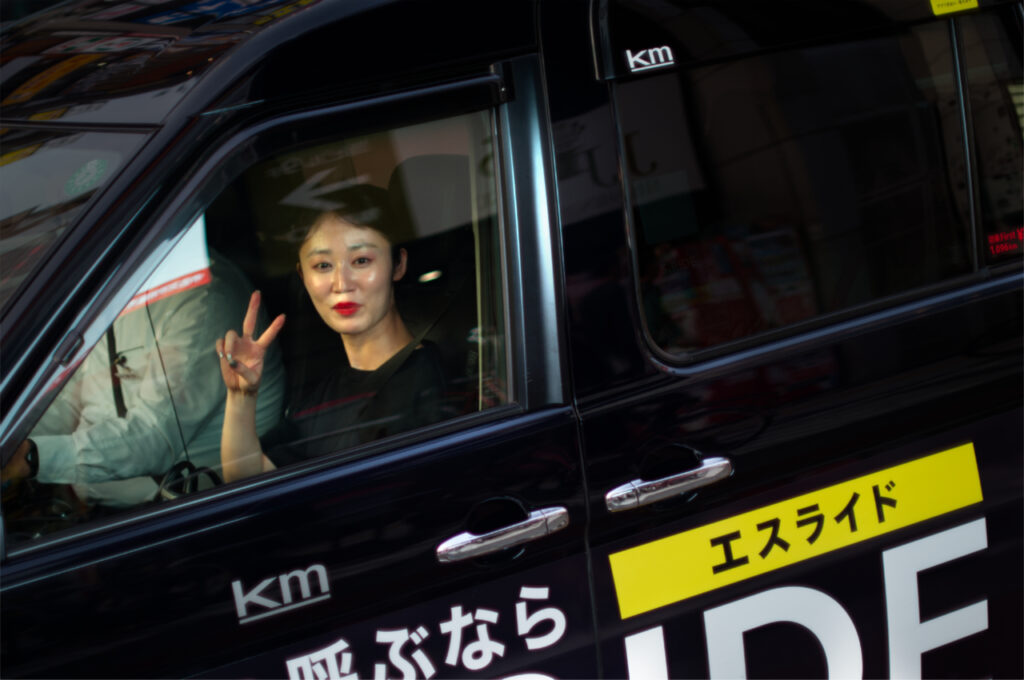
Asians, in my experience, tend to become accomplices of the moment. When they discover the camera, they generally pose cheerfully and playfully. Westerners, on the contrary, tend to contract: their face hardens, their gaze becomes accusatory, their body adopts the defensive posture of someone who has been invaded. Two opposite reactions that reveal something profound about how different cultures treat the public and the private.
I feel like Schrödinger opening his cat's box. You never know what you're going to find until you become the observer. And at that precise instant, the reality you were seeking to document no longer exists. The cat was alive and dead simultaneously until you opened the box; the person was authentic until they perceived your gaze.
I believe this same quantum paradox operates at the heart of user research. When we study how people interact with digital products, we face an uncomfortable truth: the very act of observing contaminates the behavior we're trying to understand. The moment someone knows they're being studied, their relationship with the device changes. They become more careful, more conscious, more deliberate. The natural flow breaks.
That's why I'm fascinated by snooping on what people do with their phones when they think nobody's watching. The other day, on a plane waiting for takeoff, I observed the girl sitting in front of me. She was about twenty years old, impossible Rosalía-style nails, and had just opened TikTok. What I witnessed was a frantic digital choreography: likes distributed in less than two seconds per video, screen changes at music video pace, fingers sliding with a speed that suggested automatism more than decision. And in between, bursts of "hahahaha" written at full speed in response to messages that appeared and disappeared.
That was the real behavior, unmediated by the consciousness of being under scrutiny.
We have data, of course. We can see patterns, navigation routes, drop-off points. We know that 67% abandon at a certain step, that the average time is 2.3 minutes, that flow A converts better than B. But these numbers tell us what is happening, not how (much less why). They don't capture fingers sliding frantically, the "hahahaha" written with urgency, the way the entire body leans toward the screen. Analytics quantifies behavior but doesn't reveal its texture.
Observing a user tells us how they behave when they know they're being evaluated, when each click carries the weight of observation. But that's not the real context of use. The real context is that girl on the plane, it's the person on the subway swiping Instagram with one hand while holding the rail with the other, it's that person in the car who has to change podcasts on Spotify while getting honked at for running a red light.
The difference between both scenarios isn't trivial. It's the difference between building product for how people say they use it and building for how they actually use it when nobody's looking. It's the difference between optimizing for conscious behavior and optimizing for automated behavior, that which emerges after weeks of repeated use.
The real user is fundamentally different. They're faster, more impatient, more distracted. They operate in a divided attention mode that a controlled scenario cannot capture.
I believe we must train the ability to observe without being observed, to capture those stolen moments where truth reveals itself without filters.
We need to understand what the user does and how they do it when nobody's looking. We need to capture the stolen portrait, the moment of truth before the consciousness of being observed transforms behavior into performance.
In the end, both in photography and in product building, we face the same fundamental paradox: we want to capture truth, but the very act of trying to capture it transforms it. Schrödinger's cat reminds us that there are states of reality that exist only in the absence of observation, that collapse the moment we measure them. Perhaps the solution isn't to eliminate the observer—that's impossible—but to learn to observe with such lightness that our presence barely disturbs the system we study.
–
Follow me on LinkedIn to stay updated on new posts.
–
Written with help from an AI assistant for documentation and trained on my previous texts.