Tecnoszubia,
three days to save a client .
Project summary
From client crisis to feature in days.
On the edge of churn.
Tecnoszubia, one of our best clients at Vidiv, was on the path to churn. The agent worked well technically but, every time they needed to adjust prices or change a use case in their knowledge base, they had to open a ticket, wait for the partner to escalate it to us, and wait days for a change that they knew better than anyone.
Tecnoszubia had a complex knowledge base: multiple price variables, dozens of different use cases, categories with synonyms that the agent misinterpreted. There was no CRM to collect content from and parsing their website was ruled out due to process complexity. Updates, which were constant, depended on them in the first place.
The vicious cycle was clear: frustrated client because the agent miscommunicates a price → contacts the partner → partner escalates to us → we make manual changes → validation in three to five days.
A difficult decision, three days of execution.
We had never let clients directly edit their agents' knowledge base. The risks were obvious: a bad configuration could completely break the agent. But the risk of losing a high-value client and sector reference was greater.
I trusted this client. They were satisfied with everything except the operational friction. We had to show them we could solve the problem. I designed and developed a web application connected to the agent via webhook. Every time a conversation started, the agent consulted the knowledge base updated by the client in real time.
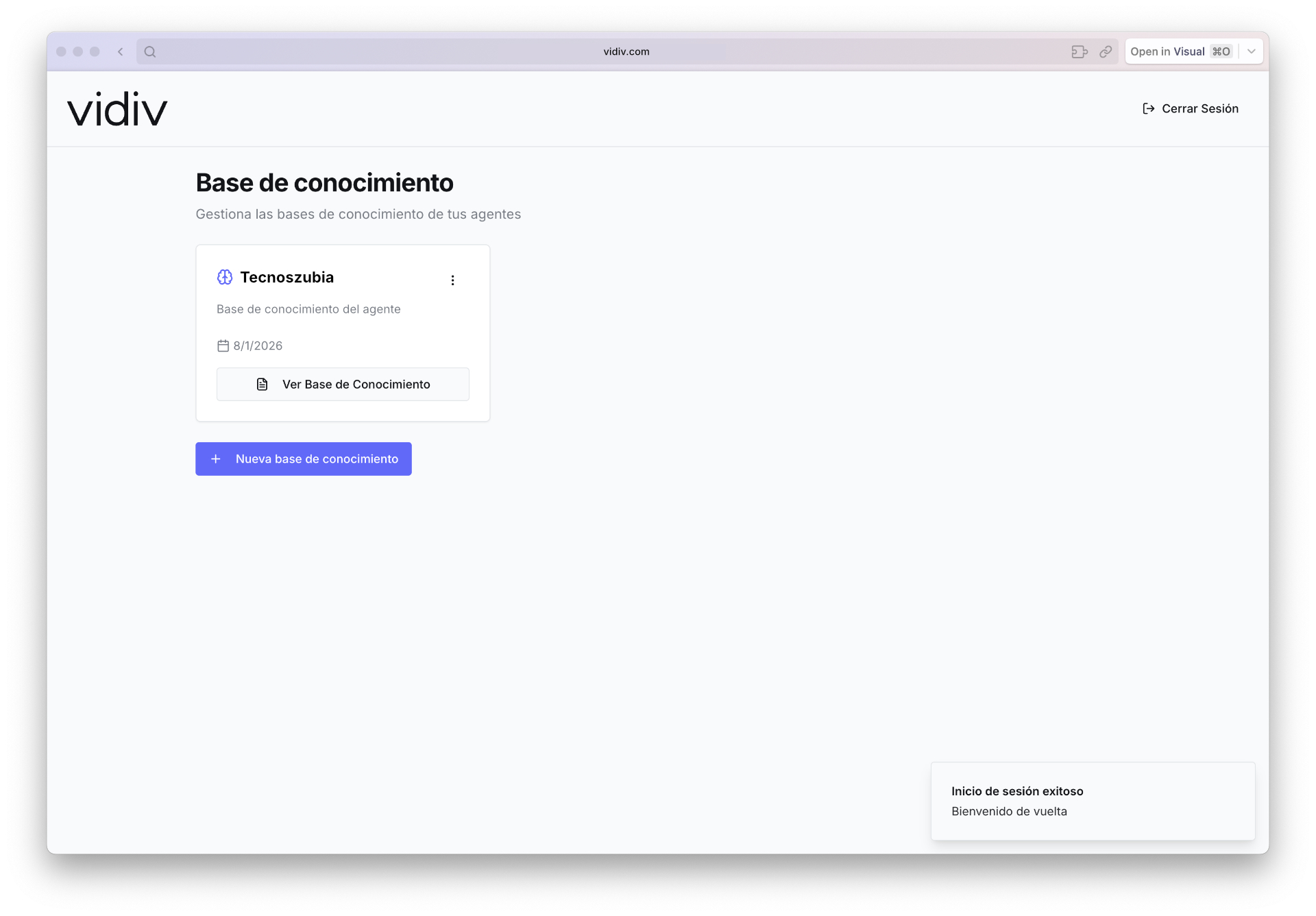
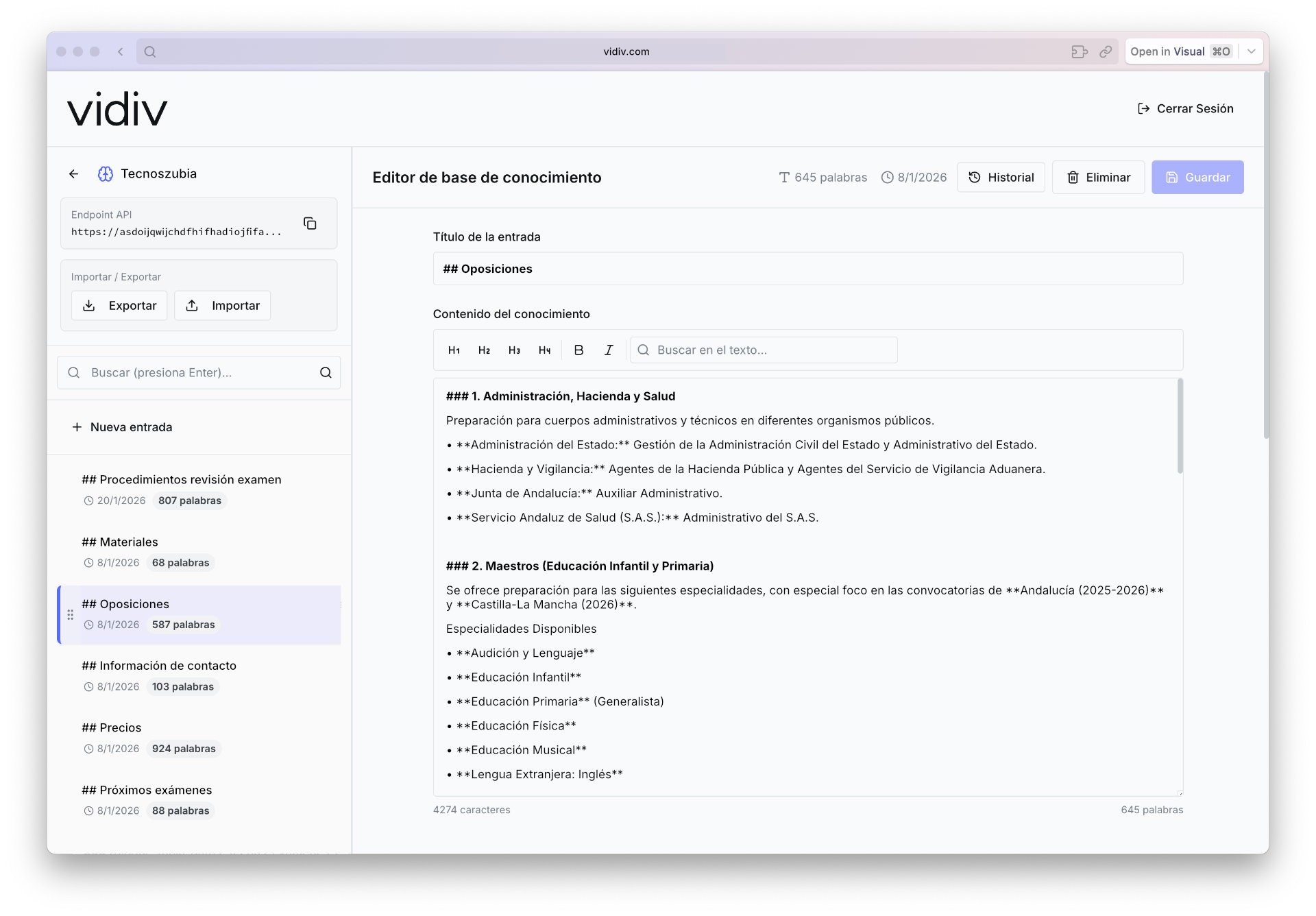
Minimalist interface, focused on usability. Tools for partners (import and export in JSON format). Connection via endpoint to the agent's pre-webhook. Instant update, no deploys.
What used to require opening a ticket, escalating it, manually editing, deploying and validating for three to five days, was now done by the client editing directly in the application: two minutes.
Clients who solve their problems without waiting, stay.
Decisions.
-
Break the internal rule.
We had never let clients directly edit the knowledge base. This time we did. The rule existed for a reason — a bad configuration could break the agent — but the risk of losing a high-value client and sector reference was greater. We consciously accepted the new risk and designed around it.
-
Validate with the best client, not with an A/B test.
Sometimes the best way to validate a high-impact feature is not an A/B with hundreds of users, nor a three-month roadmap, nor an exhaustive requirements analysis. It's building a custom solution for your best client in 72 hours and seeing if it works. If it works, you scale it. If not, you learned fast and cheap.
-
Usability before technical power.
Competitors offered editable knowledge bases that forced the client to understand the architecture. We focused on usability and ease of use. Minimalist interface, language close to the client's, tools for the partner behind but out of the end user's way.
-
Close monitoring to learn from the agent.
During the first weeks when the client was getting used to using the application, I made sure to do completely personalized follow-up. Together we detected and learned the origin of many agent errors: hallucinations due to categories with critical synonyms (maestro/profesor), poor hierarchy in the knowledge base, useful things to understand about how an LLM works in production. This feedback improved the core product and our know-how beyond this client.
-
From rescue to feature.
What started as an emergency rescue was tested with a second client, consolidated, and today is on its way to being a standard platform feature. The important decision was not to build it, but not to let it die as a patch and bring it to the core product.
What remained.
Client saved from churn. Continuous support tickets that become practically zero. A tense relationship that becomes excellent. The partner freed to add value to other clients. The application operational in two enterprise clients and consolidating as part of the core product.
The revelation was counterintuitive: giving more control to the client doesn't increase risk, it increases adherence. And the biggest methodology learning was another: sometimes building fast for a specific client teaches more about your product than weeks of planning. Execution under pressure reveals what really matters.