Vidiv, conversational
agents .
Project summary
From technical proof to consolidated product. Widget, control panel and analytics, designed while we were understanding what was needed for a conversational agent to make sense.
The starting point.
When Vidiv Eventos couldn't find product-market fit, the team didn't start from scratch. Years building WebRTC and low-latency infrastructure left a valuable technical foundation. With it they developed a proof of concept: a conversational AI agent with voice.
The response from early clients confirmed there was something there. The question was how to turn it into a product — how to give that technical foundation a form that someone from outside could use, understand, pay for.
Two layers, two audiences.
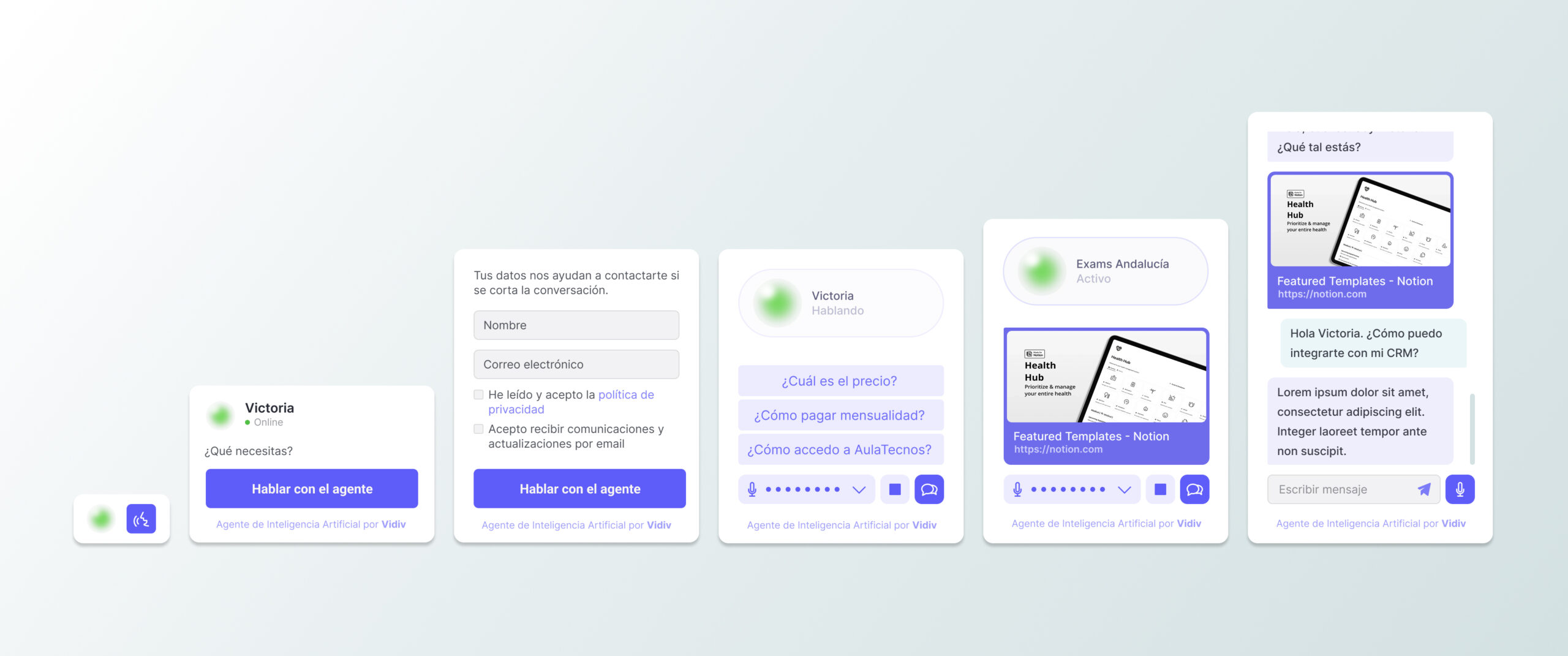
Together with Iria Maceira we designed the solution in two layers. The first, an embeddable widget for client websites: the contact point between the agent and the end user. The small piece, the one that's seen.
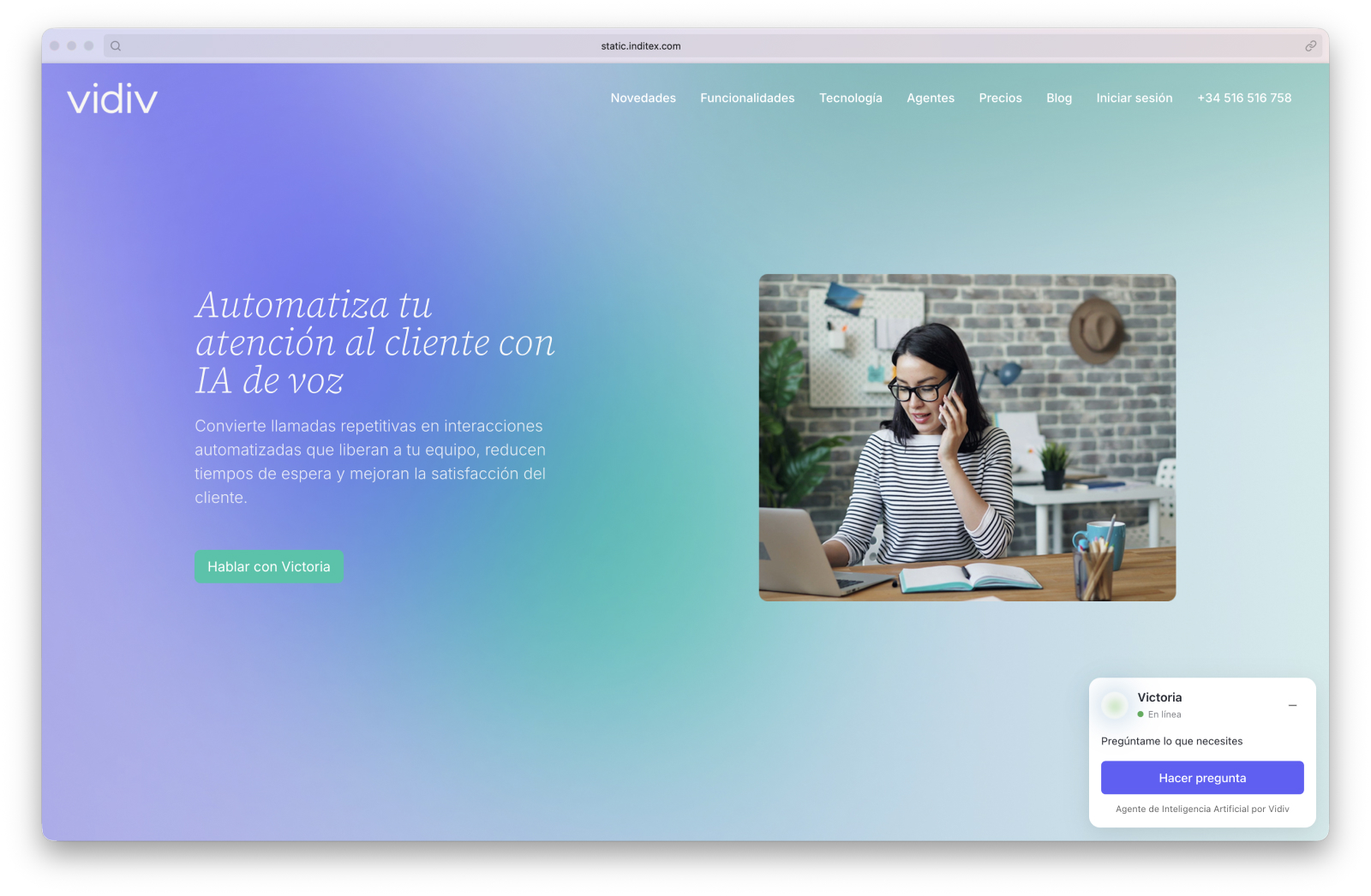
The second, a control panel for the technology partners who managed the platform: agent creation, integration with external systems and a set of technical parameters that we discovered as we used them ourselves and gathered feedback from partners. The big piece, the one nobody sees.
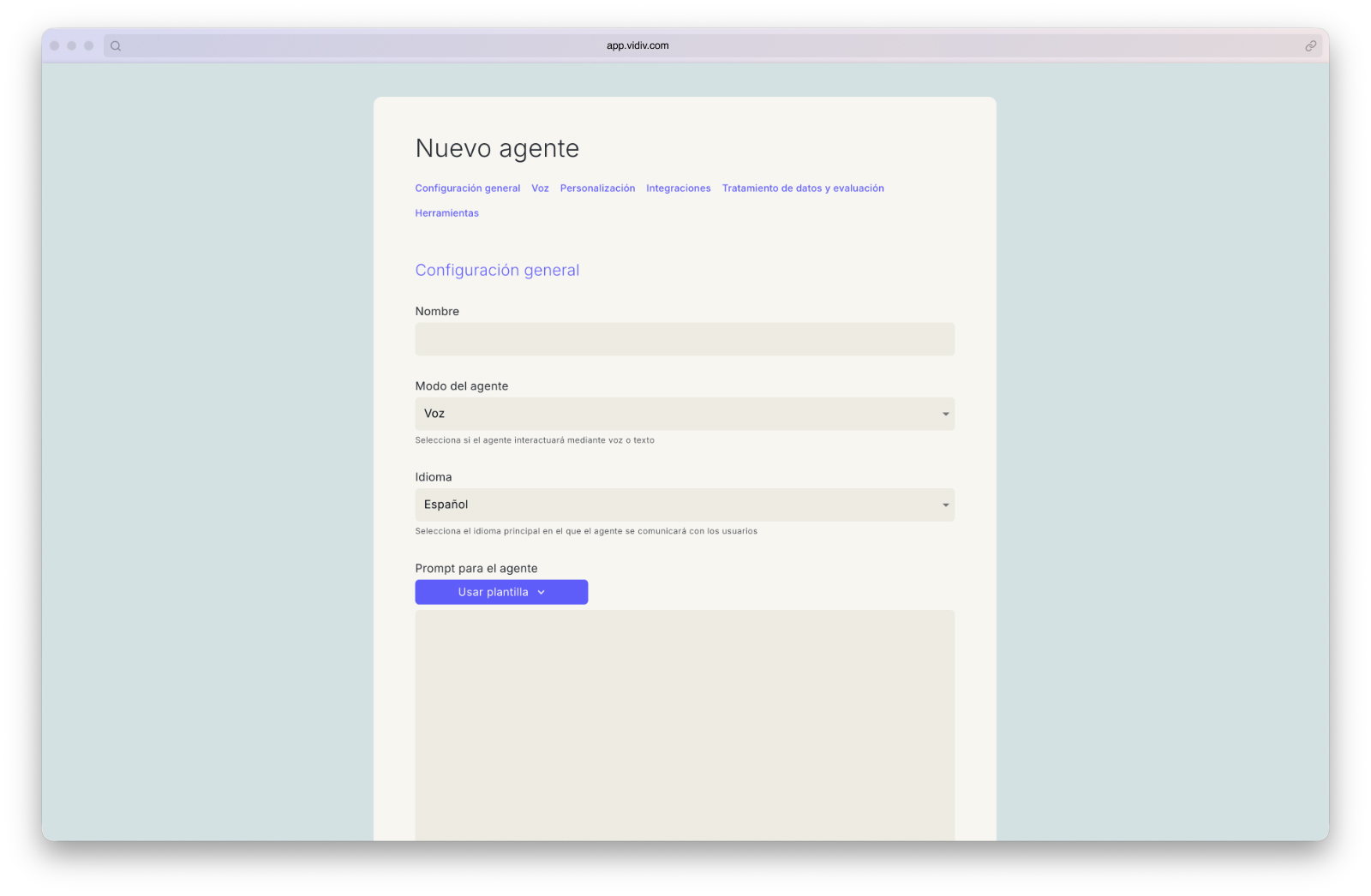
Designing the tools forced us to understand them in depth: LLM models, temperature, Top P, verbosity, STT and TTS providers. Each adjustment had to have a name, a unit and a default value that a partner could touch without breaking the agent.
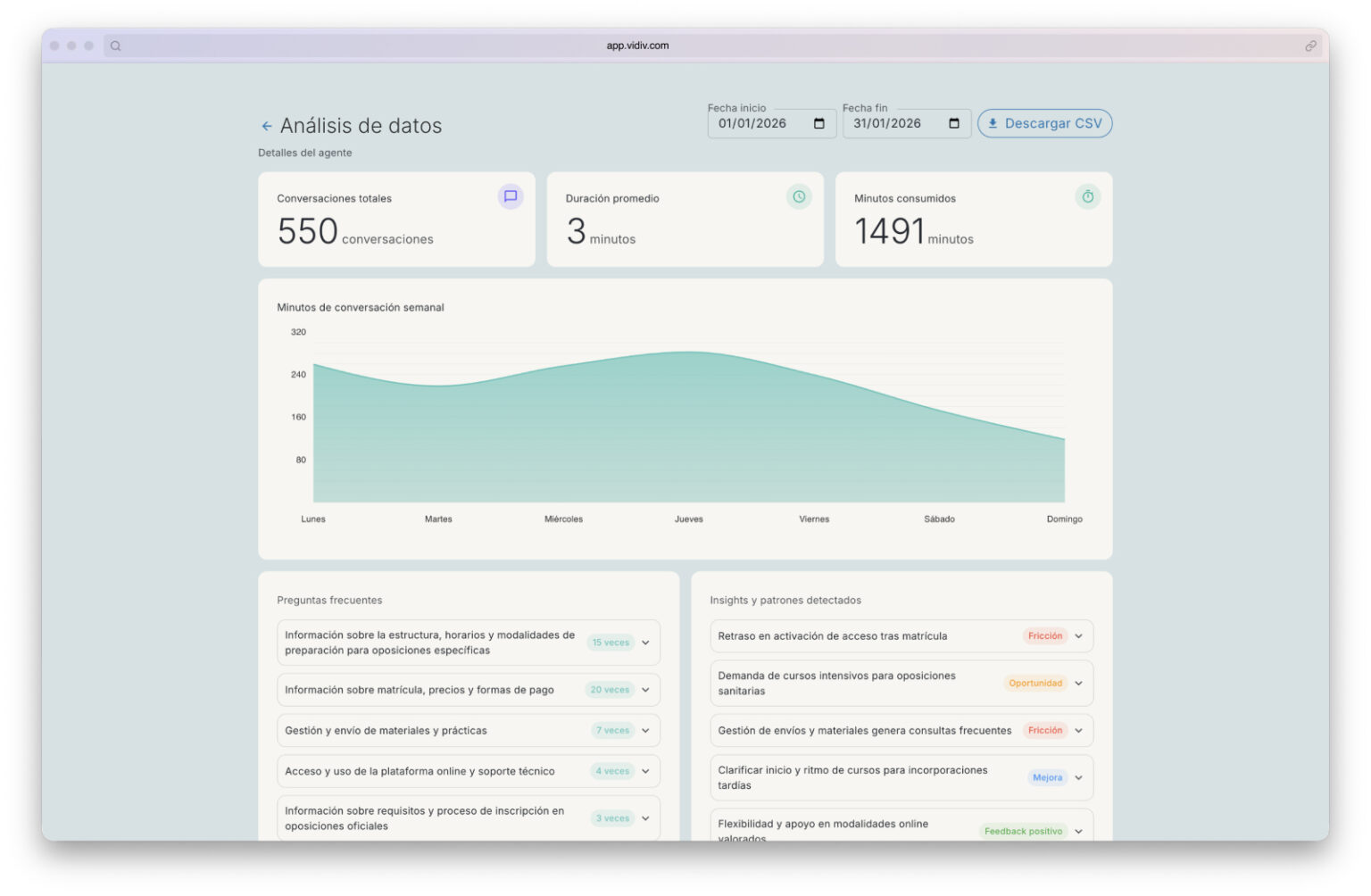
Analytics wasn't just another screen: it was the place where the client understood what their own audience was talking to them about.
Decisions.
-
Widget first, panel later.
We accepted that the visible face of the product had to be resolved before opening the panel, because it was the only surface that the end user was going to touch. The panel also had to be well designed from the start — well-designed things are perceived as easier to use.
-
Using the parameters ourselves.
Before designing the UI for the panel, we tested each parameter by hand with real agents alongside the technology partners. Their feedback was fundamental to discover which ones needed to be exposed and which could stay at default values. The panel resembles the mental map we had after those experiments, not before.
-
Visual customization of the widget.
The widget had to fit very different brands without betraying its own coherence. From the panel, the partner could customize the widget's main color to adapt it to each client's identity.
-
Compliance by design.
Consent, retention and deletion flows according to GDPR and the European AI Act went through the same level of attention as any other screen. No generic pop-ups: each decision had its text, its place in the flow and its confirmation.
-
Analytics count conversations, not clicks.
Beyond usage metrics, conversations were automatically processed to extract qualitative insights: recurring themes, frequent questions, real concerns. What the Vidiv client read wasn't a dashboard: it was an editorial summary of what their audience had come to say.
What remained.
The product went from technical proof to stable piece of Vidiv. More important for me: the process left a method. Starting from a technical foundation, building both faces at the same time, using the tools before selling them, and treating analytics as content and not as decoration.