Post content
In the book, City of Darkness, there's a photograph that haunts me: a narrow corridor in Kowloon Walled City where water drips from improvised pipes and a mailman navigates between intertwined electrical cables.
It's not chaos. It's a deep logic that emerges when architecture frees itself from its dogmas to serve only people.
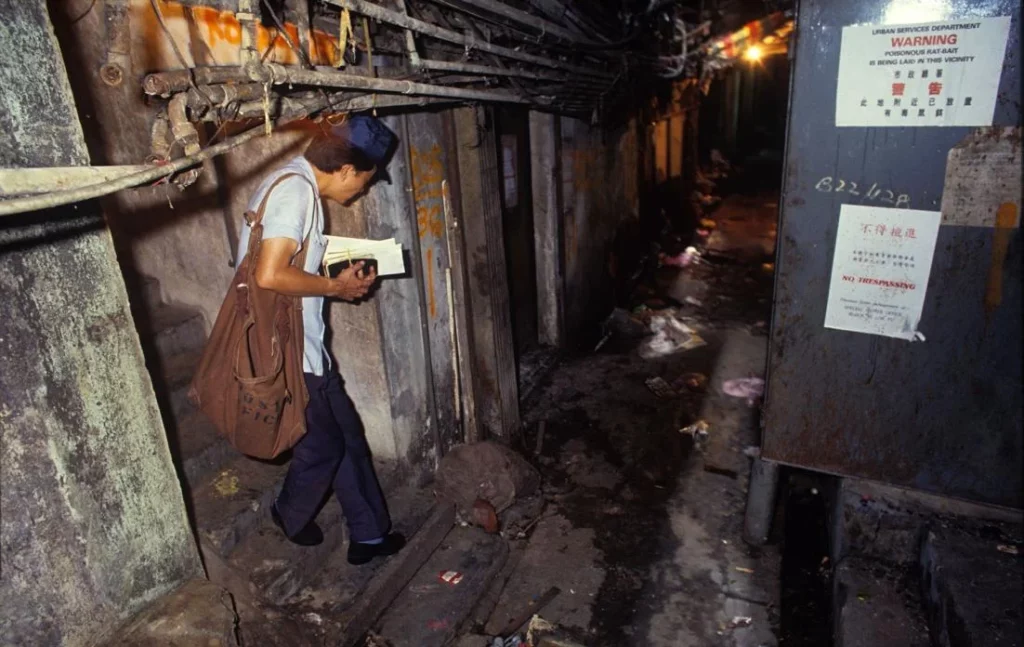
In the book, Greg Girard and Ian Lambot capture something that goes beyond architectural documentation. In a quote from Douglas Young:
"In the West, an architect is responsible for the design of a building; when construction is completed, the appearance of the building is fixed. In Hong Kong, the treatment of architecture is different. Once a building is completed and occupied, modifications soon appear. A native Hong Kong building will never be finished because tenants will always make new adaptations. The building as a living organism never stops evolving."
Le Corbusier conceived the city as a "machine for living": a perfect, geometrically ordered system. His rationality left no room for the unexpected.
Kowloon represents the opposite. Arising from a jurisdictional void, it developed without architects, without planners, without codes. It was an involuntary laboratory of spatial organization.
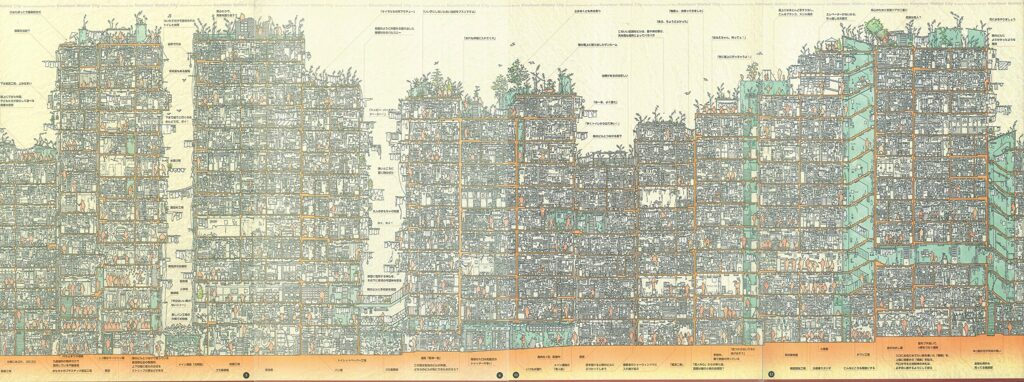
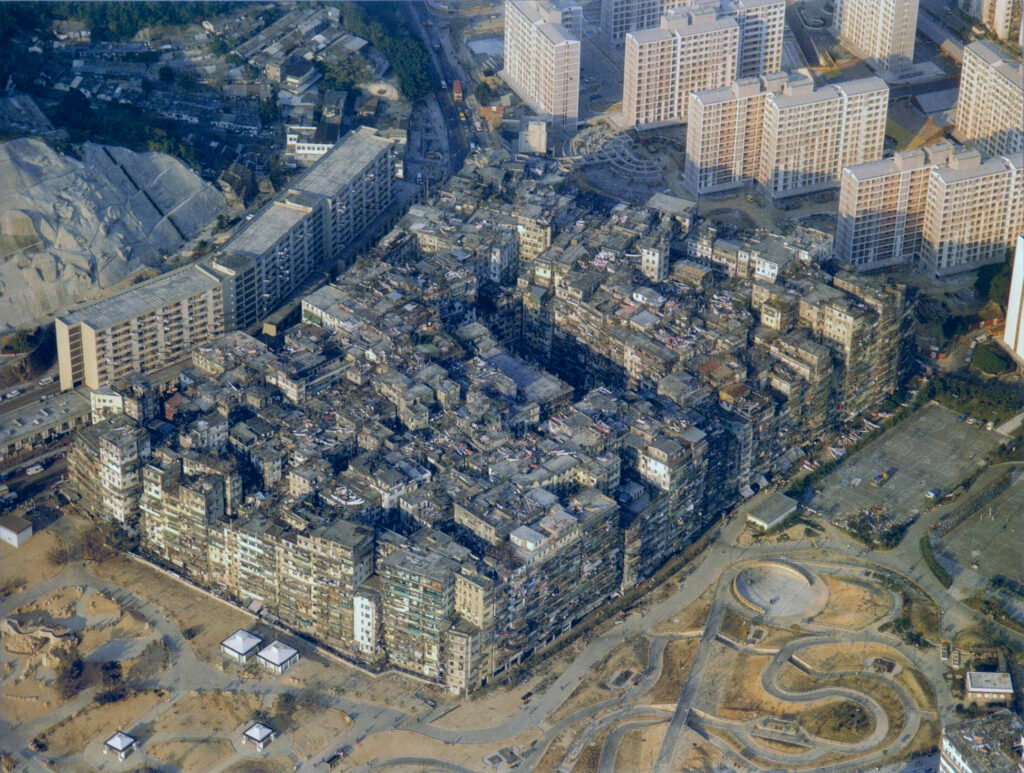
For forty years it transformed into the densest agglomeration in history: 35,000 inhabitants in 2.6 hectares. The buildings were interconnected by a three-dimensional network that allowed crossing the entire city without touching the ground. This infrastructure emerged from thousands of decisions by inhabitants who needed to move, to connect.
Previously I told how Aviv Kochavi applied this same organic logic for very different purposes: his soldiers traversed walls to redefine urban space, creating new paths where none existed before. The difference was intentionality: while Kowloon's inhabitants created connections to live, soldiers created them to control. But the underlying principle is the same: space is defined by movement, not by physical limits.
Similarly, physical products are conceived from that Western perception to endure in their final form. Digital ones operate like Kowloon: they live in constant iteration.
Think about how users use a functionality unexpectedly or don't adapt to a new process that, in theory, optimizes their work.
These are not design "errors" that must be corrected, but dirt paths that appear spontaneously when users refuse to follow the paved path we've laid out for them. They're the digital equivalent of the improvised corridors that connected Kowloon's buildings: solutions that emerge from real need.
Corbusier's philosophy in digital products manifests in the search for the "perfect product," the roadmap that anticipates every functionality. It's believing we can imagine all contexts of use from the design studio.
But users create functionalities we never imagined. Intelligence in design isn't in the perfection of the initial plan, but in the system's ability to adapt.
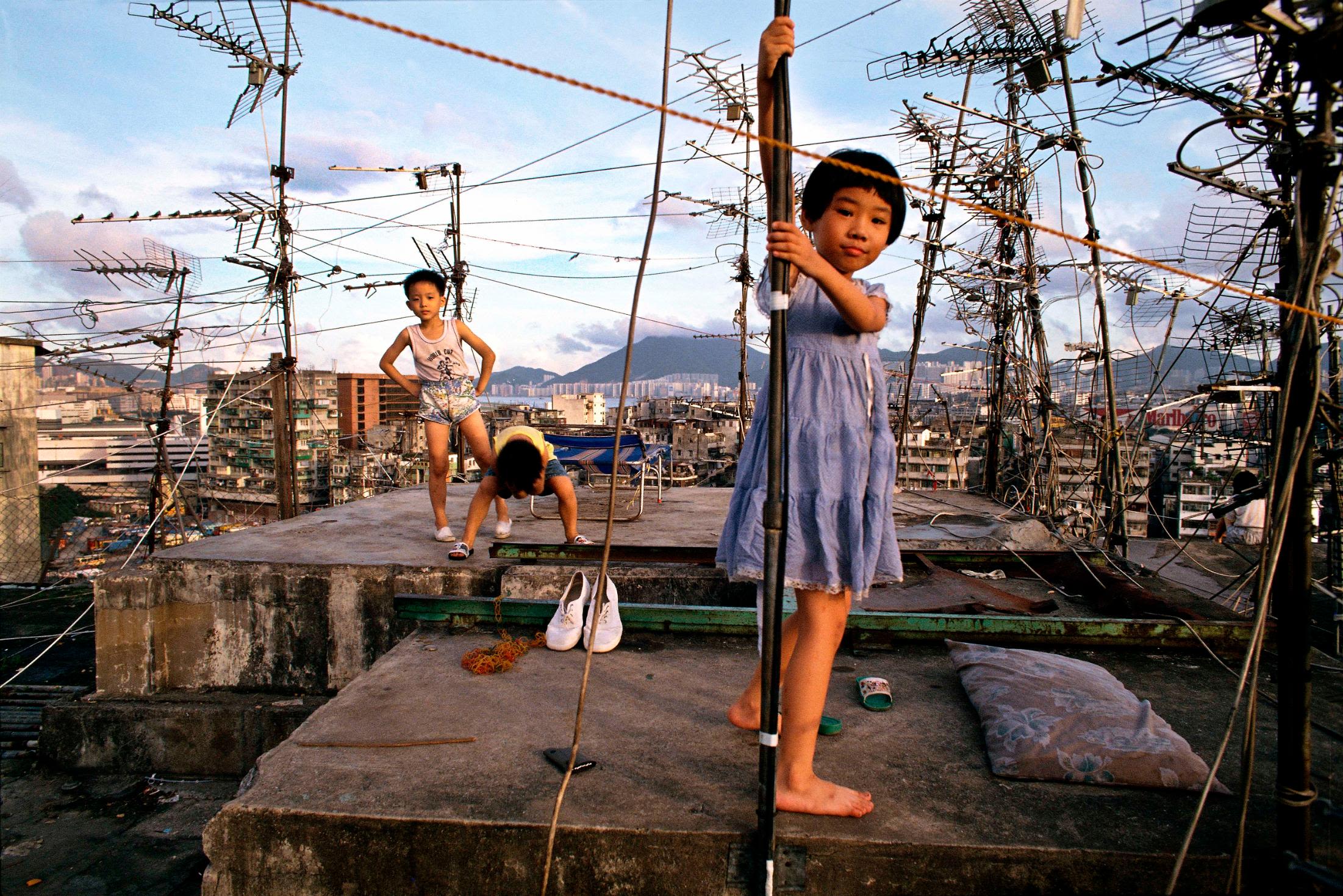
Jane Jacobs understood something that Corbusier didn't grasp: successful cities operate as systems of "organized complexity." In digital products, this humility translates to recognizing that our role isn't that of the omniscient architect, but of the gardener who creates conditions for life to flourish in unexpected ways. The one who takes care of tending to the dirt path that has been created spontaneously.
This reminds me of something Linus Torvalds used to say:
Don't ever make the mistake of thinking that you can design something better than what you get from ruthless massively parallel trial-and-error with a feedback cycle. That's giving your intelligence much too much credit.
The best products aren't perfect machines but living organisms capable of evolution. Living architecture doesn't seek perfection but permanent adaptability.
Maybe it's time to abandon our Corbusian dreams of perfect products and embrace the wisdom of Kowloon.
It's the difference between designing a finished product and creating conditions for perfection to emerge from the dialogue between intentional design and real use.
–
Many extra-legal and illegal things happened in Kowloon Walled City, but the situation wasn't as dire as in the collective imagination: most were people trying to survive. The nickname City of darkness doesn't come from the city being a den of crime—it's not metaphorical. The reality is that urban density was such that sunlight only reached ground level in a couple of alleys.
–
Thanks to Jorge for helping me recover the Linus Torvalds quote.
–
Follow me on LinkedIn to stay updated on new posts.
–
Written with help from an AI assistant for documentation and trained on my previous texts.