Post content
It was an April morning in 2003, the lights of Maria am Ostbahnhof flickered with that hypnotic cadence that characterizes Berlin venues where the night stretches like chewing gum. We had arrived early for sound check, when there were still traces of the previous day stuck to the walls. The backstage was red and decorated with leather sofas and oil paintings depicting pornographic scenes. The air retained that particular density of spaces that have witnessed too many stories.
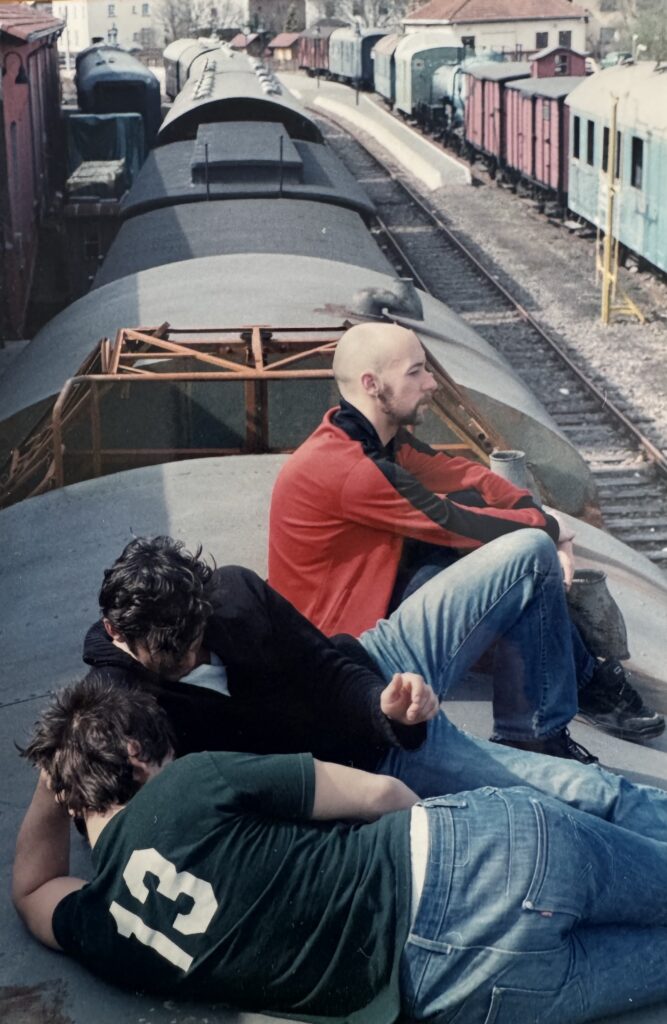
After finishing the sound check and leaving everything ready for that night's concert, I headed to the WC. There, among tiles that had lost their original whiteness and multilingual graffiti overlapping one another, was where I met a Mexican guy who was cleaning the restrooms. I don't remember exactly what we started talking about—maybe the Berlin cold, or the strangeness of meeting another Spanish speaker in that place—but the conversation flowed with that naturalness that sometimes emerges between strangers. It was after a while, when I had already lost track of time in that unexpected conversation, that he proudly told me he was a photographer. That's how he defined himself. Then everything changed: his hands, weathered by detergent and chemicals, began gesticulating describing invisible frames, he spoke of composition and natural light with an ease that strangely contrasted with the meticulousness with which he had been cleaning moments before, while the echo of our voices bounced against the damp walls.
The paradox was evident: his identity inhabited a territory completely different from his circumstances.
This scene came back to me years later, when I read in "Leadership is an Art" an anecdote that resonated with the force of an unexpected echo. Max De Pree, who was CEO of Herman Miller, relates a story his father told him:
"My father, being a young manager at the time, did not particularly know what he should do when a key person died, but thought he ought to go visit the family. He went to the house and was invited to join the family in the living room. There was some awkward conversation—the kind with which many of us are familiar. The widow asked my father if it would be all right if she read aloud some poetry. Naturally, he agreed. She went into another room, came back with a bound book, and for many minutes read selected pieces of beautiful poetry. When she finished, my father commented on how beautiful the poetry was and asked who wrote it. She replied that her husband, the millwright, was the poet. It is now nearly sixty years since the millwright died, and my father and many of us at Herman Miller continue to wonder: Was he a poet who did millwright's work, or was he a millwright who wrote poetry?"
De Pree's question transcends the anecdotal to settle at the heart of how we conceive human identity and, by extension, how we organize our social and work expectations. Was my acquaintance from Maria am Ostbahnhof a photographer who cleaned bathrooms, or someone whose essence was defined by cleaning who occasionally captured images? The answer reveals more about who asks than about who is being asked about.
We usually organize ourselves socially from the need to define ourselves in clear and stable terms. As Yuval Noah Harari explains in his book "Nexus", bureaucratic systems—educational, corporate, administrative—require by their very nature categorization and systematization to function. However, human experience is naturally multifaceted. Each individual carries a set of experiences, skills, and perspectives that rarely fit perfectly with formal descriptions or institutional expectations.
Ed Catmull, in "Creativity, Inc.", develops a fundamental idea: different viewpoints are not competitive, but additive. In a truly healthy organizational culture, people must be able to express themselves freely and enrich the company with their personal individuality. The diversity that really matters is not just what can be easily categorized—gender, ethnicity, age—but that more subtle and profound diversity that resides in lived experiences, in the unusual connections that each mind has established throughout its particular existence.
The Mexican photographer could have contributed unique perspectives to any creative project if there had been a context that valued that particular intersection of experiences. A truly effective leader—following the line of thought of De Pree and Catmull—is not one who best categorizes and controls their team, but one who best recognizes and cultivates the latent potential that each person carries with them.
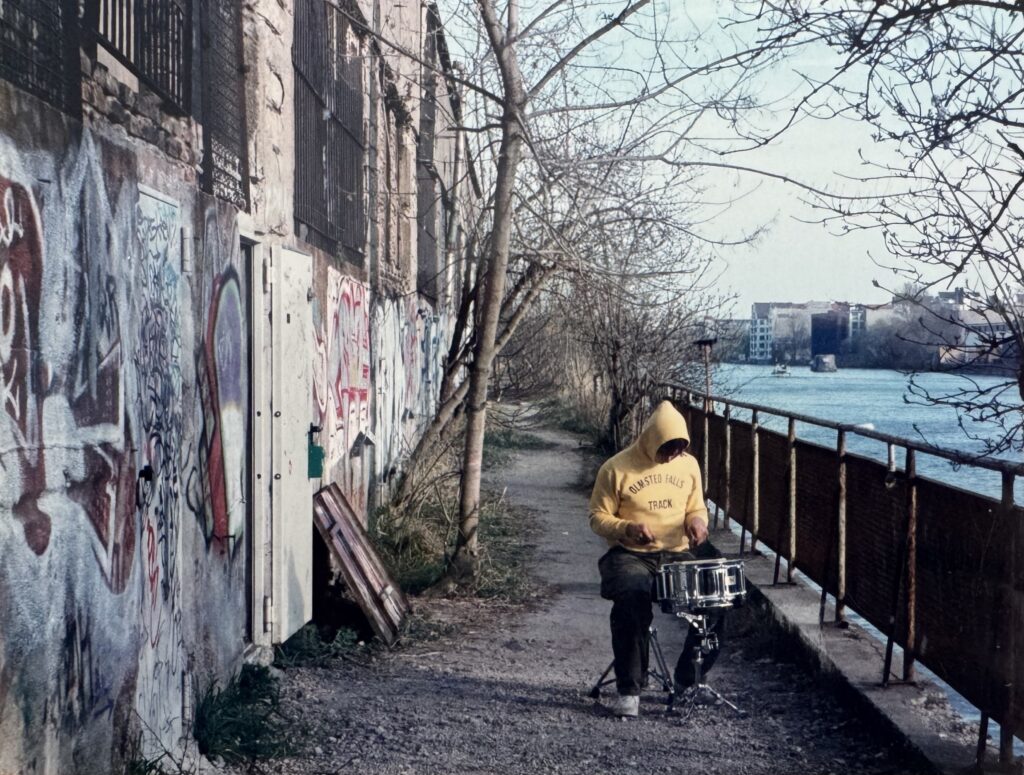
Perhaps the deepest challenge we face, both as individuals and as a society, is developing the ability to see people in their totality, to recognize that behind every apparent function exists a universe of possibilities. This is not just an ethical question, but also one of practical intelligence. In an increasingly complex and interconnected world, the most innovative solutions tend to emerge from the intersection of seemingly disparate disciplines and experiences.
Maria am Ostbahnhof closed its doors years ago. But the lesson I learned in its bathrooms remains: every human encounter is an opportunity to recognize the complexity of the other. The Mexican photographer, wherever he is now, continues to be both things at once and many more that I will probably never get to know.
In a world that constantly pressures us to define ourselves in simple and stable terms, keeping that inner multiplicity alive is, perhaps, the most revolutionary act we can perform. Not as a form of resistance, but as a way of honoring the richness of human experience and creating possibilities. De Pree's question remains open, and it is in that openness where its transformative power resides. Because in the end, there are people who are poets who do millwright work, or millwrights who write poetry—and the beauty lies in not having to choose.
This perspective is also fundamental for those who relate to companies and organizations, whether as clients, suppliers, investors, or collaborators. Understanding what a polyhedral business culture contributes—one that recognizes and cultivates the multiplicity of its members—allows us to appreciate the differential value that arises when organizations embrace human complexity instead of simplifying it. These companies not only generate better results, but also contribute to creating a richer and more adaptable social fabric.
–
The concert went well, sold out if I remember correctly.
–
Follow me on LinkedIn to stay up to date with new publications.
–
Written with the help of an AI assistant for documentation and trained on my previous texts.