Post content
At the end of July, I attended an online masterclass: "A Thousand Years of Design." It was organized by the online learning platform Design Graduate and was taught by Javier Cañada.
During just over an hour of conversation, Javier began making temporal leaps connecting the past and the future, from Gothic architecture to Apple's Vision Pro. Stopping at some points along that journey to introduce and explain different concepts, such as task-centered design.
Among all those stories there was one that I probably already knew, but that this time particularly resonated with me: how the miniaturization of products impacted their use, redefining the previous relationships that existed between the device, its interface, the user and their context.
This story, without me being very conscious of it, would return to my head shortly after.
And it would do so accompanied by the two questions launched at the end of the event:
- "How will interfaces be in 2033?"
- "Will we still be using the mobile's touchscreen interface in 10 years to solve our tasks?"
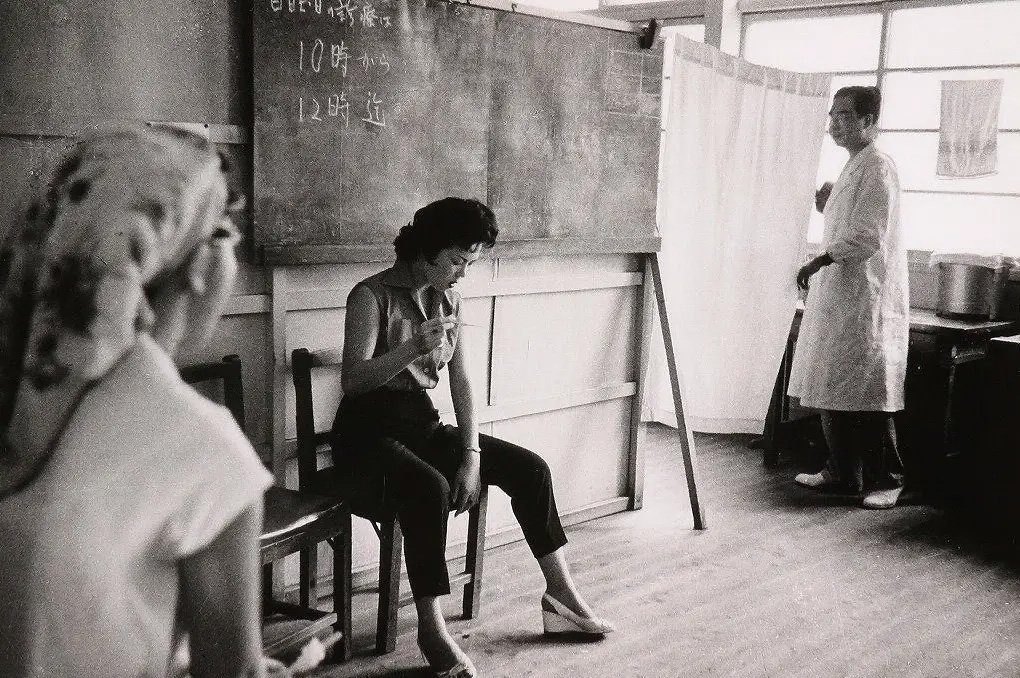
A few days later, while washing some dishes, my head was turning over these ideas the same way the sponge was doing over the dishware: What is the future of interfaces? Will it be a voice interface like in Her? Like Humane proposes with their pin? How will the miniaturization of objects affect us?
The reduction of radios turned a "living room" experience, familial, collective, into an individual and private one (the transistor, the walkman).
Books went from being large and voluminous and being read in a church to small objects that fit in your pocket. From public to private. From collective to individual.
Watching a movie required going to the cinema, now we can watch it on our phone. Again we went from a collective experience to an individual one.
With the photographic camera something slightly different happened. It also miniaturized, evolving from large format to the compact 35mm camera. We went from family studio portraits to journalistic or documentary photography. We went from choreographed to spontaneous.
But it also affects the photographer themselves, who can stop being a public professional to become an anonymous entity. And going unnoticed is one of the key points of street photography: if you get caught taking a "candid shot" maybe all you'll get is a slap.
That's why, in this photographic genre, analog cameras with their characteristic sounds lose ground to electronic ones, totally silent.
And, of course, the mobile phone thus becomes the perfect tool: silent, tiny, discreet, ubiquitous... Who hasn't used it at some point to take a photo without being seen?
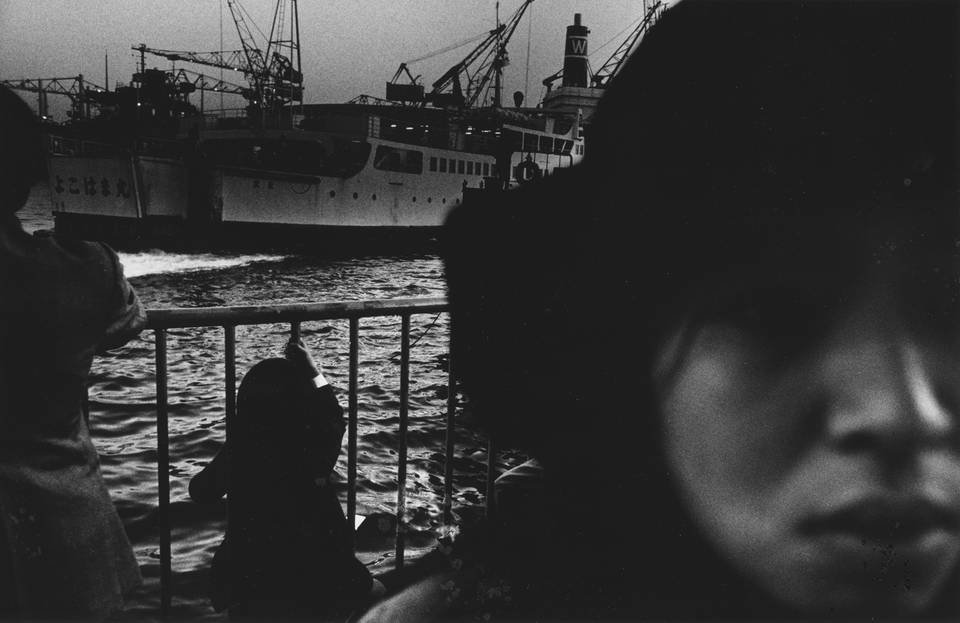
And if there's a country with a prolific history of street photography it's Japan. Curiously the only place where iPhones are sold crippled so they always make a sound when taking a photo. Always. It's impossible to silence that sound on a Japanese iPhone. It's the way to recognize (and avoid) a pervert who has slipped the phone under the skirt of the schoolgirl who just got on the metro in Harajuku to get a photographic trophy: click!
Having to tell the device: "take a photo" would expose us just like the sound of the Japanese iPhone.
In the miniaturization of the "large and cumbersome" the collective experience has transformed into individual, the public has become private, authorship has dissolved into anonymity...
Voice interfaces, however, reverse the situation.
Imagine going in a crowded subway car and asking your audiobook to "highlight" an epic phrase from a self-help book. A command like: "Hey Siri, highlight the part where it says I have to shout 'I am a tiger' every day in front of the mirror."
Now imagine that same subway car full of Spaniards and Italians interacting with voice interfaces. A Mediterranean party.
However, how comfortable and easy it is to slightly tilt your mobile so no one knows what you're doing. A small subterfuge that hides whether you're reading McLuhan, playing Candy Crush or watching PornHub.
Will we be willing to lose privacy with voice interfaces?
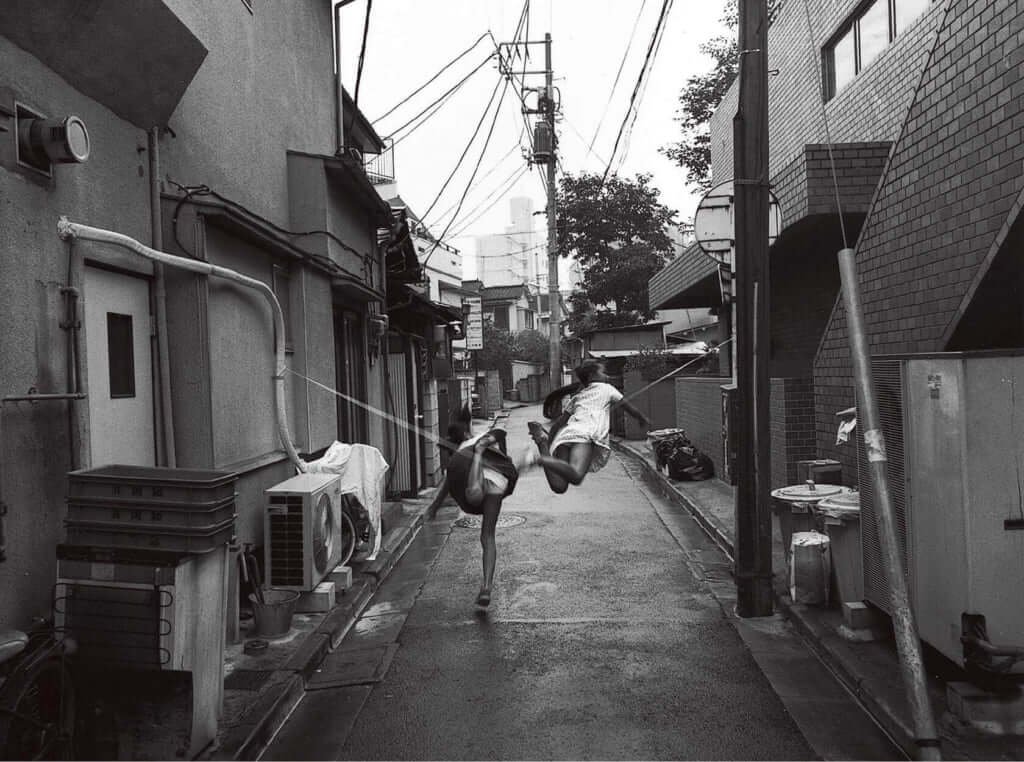
About a month ago I was on the train, and a woman in the seat behind me was recording voice messages in which she told a friend what a drama her life was. In great detail. Hearing something so intimate from a stranger made me feel tremendously uncomfortable. And I couldn't have been the only one, a girl who was nearby went to a distant area to continue with her reading. On paper, private.
Recently, on a terrace, a couple of older gentlemen were proudly showing their huge slice of tortilla and their beers to a friend via video conference... of course, and without meaning to, I also caught up on how life was going for them.
Right at another table in the bar next door, a couple was on a date. Or rather the guy was trying, the girl was maintaining a video conference with her niece, for an hour, ignoring him. I can attest that the girl was very nice and chatty, she had a couple of quite funny stuffed animals.
I don't know what interfaces will be like in 10 years. Nor if voice interfaces will make us lose privacy or not, but maybe we are normalizing certain types of behaviors that contribute to it.
Maybe we'll end up turning our lives into an act of exhibition and instead of "cheese" we'll shout "seeeeelfie" at the camera. And it will understand us. And it will shoot accurately. And, of course, it will apply the "smile" filter.
Click!
Follow me on LinkedIn to stay updated on new publications.