Post content
The jet lag was hitting hard and, as usual, we hadn't made plans for the day, so we did what we always do: improvise.
As we stepped out onto the street, the heat and humidity surrounded us while we pulled out our phone to search for our next destination on Kakao Maps.
Under the gaze of a punishing sun we decided to take a walk to Buckchon Hanok village (북촌한옥마을), just 40 minutes walking from the hotel. It's a small residential neighborhood east of Gyeongbokgung palace and one of Seoul's tourist spots, if Seoul can be considered touristic.

This area is full of traditional Korean houses called hanok, whose origins date back to the 14th century, the same era when Emperor Lee Seong-Gye moved Korea's capital to Seoul and began construction of Gyeongbokgung palace.
Hanoks can take different forms but their design is always conceived to keep them cool in summer and maintain heat in winter. For this they use a kind of underfloor heating called Ondol, combined with another system to cool it during summer, Maru. The materials used in their construction are mainly wood and stone.
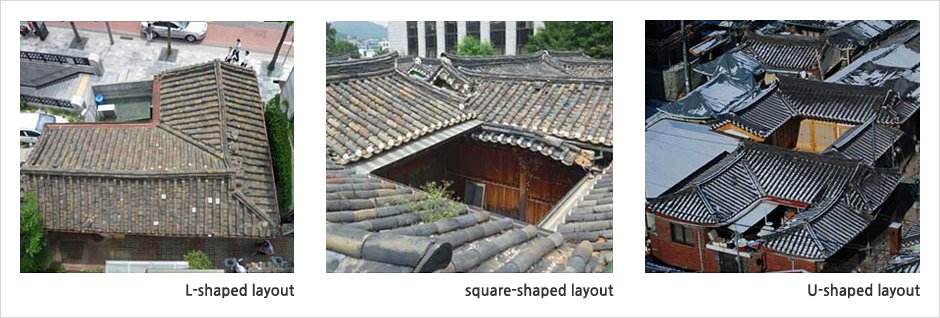
Buckchon is a very quiet neighborhood despite being quite busy with tourists. Walking through its streets is like going back hundreds of years in time... it reminded me, in a way, of Hagashiyama in Kyoto.
However there are certain details that completely break the suspension of disbelief. For example: traffic signs, asphalt sprinkled with a few tourists, and the tension that builds between them and the locals. Some greet you kindly when they see you pass, others put up signs asking you to keep quiet near their property.
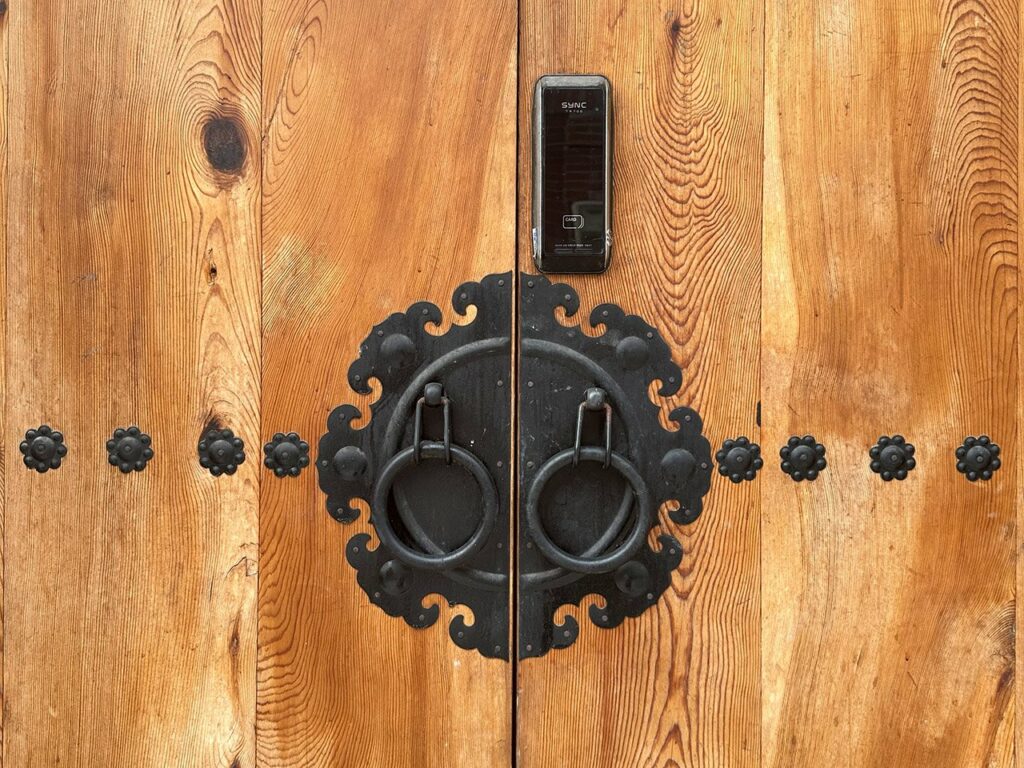
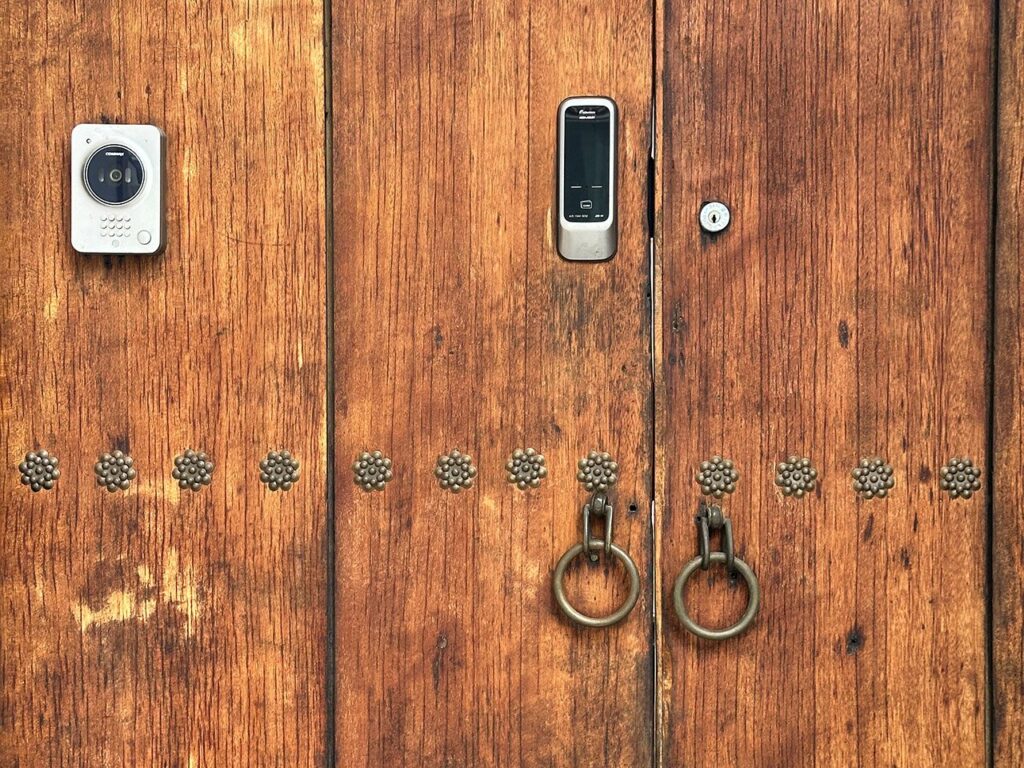
But what kept catching my attention were the doors of the hanoks. Wooden doors with a centuries-old appearance, with rivets and metal door knockers... and doorbells.
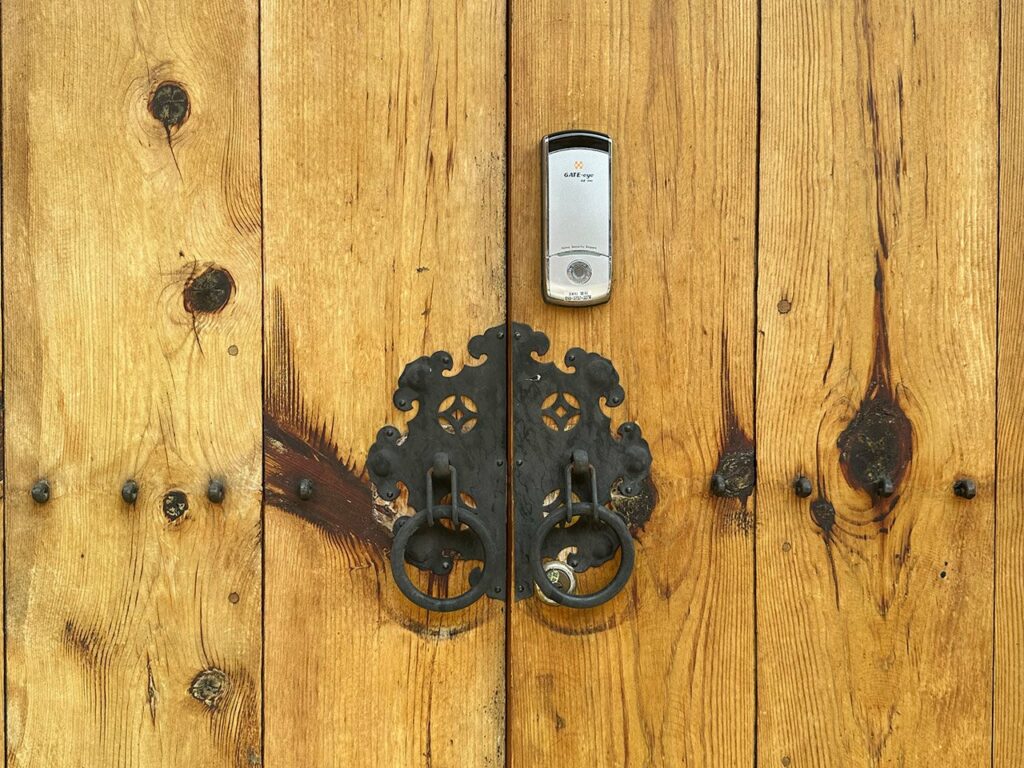
Black doorbells, silver ones, the "white" that a 90s PC would have now, with handle or without, with or without lock, with video intercom or without... and always plastic... Always corrupting their environment, with no intention of creating harmonious coexistence (neither visual nor sonic) with the other elements that surround them.
A combination of classic and modern, but badly done.
And, of course, relegating the door knockers to a purely aesthetic complement.
As we walked past the doors, I was thinking about how little we reflect on what we lose when introducing new technologies. And, even when we do, it seems we're forced to surrender to them. The practical, the convenient, always triumphs, even if it leaves corpses behind.
Electronic doorbells are crude and inhuman. They have no nuance. It doesn't matter how you press the button, the gesture can be full of force or apathy, but the result is always the same: the same sound, the same volume, the same "ring." For both the caller and the one receiving the visit.
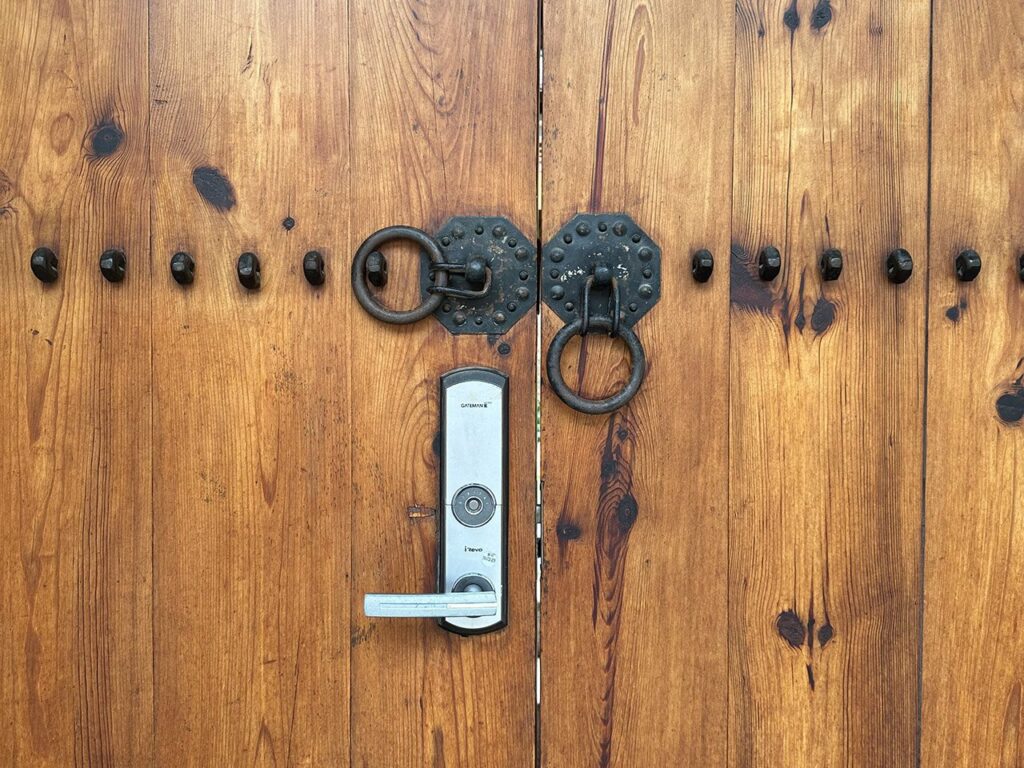
However, with a door knocker, an enormous palette of ways to express yourself opens up with just two parameters: force and speed.
You don't knock on the door the same way when you're happy as when you're sad, when you're going to give bad news or good news, when you're angry or when you're happy, when you're in a hurry or when you're calm...
And all those nuances are perceived by whoever is in their home. Thus being able to emotionally anticipate the situation that awaits them when they open the door.
With electronic doorbells all of that becomes the same impersonal sound.
In the book Lo Esencial, Miguel Milá talks about his preference for the idea of evolution over revolution. Why kill door knockers instead of evolving them? We could maintain their form and update their function with a pressure sensor that recognized different types of knocks and reproduced their sounds throughout the house. In the case of doorbells we could include a speed sensor (and even after-touch, technologies commonly used in synthesizers) to expand their sonic palette and make it more emotional.
And now I can't stop thinking about handwritten letters and text messages.