Post content
Specifically from Toulouse. Monique explained it to us.
–
Night was falling, so after finishing our beer at Café St. Victor we went to dinner at Les Pipos.
Les Pipos is a statement of intent in itself: the ramshackle furniture, walls covered by a yellow patina from lots of bohemian life lots of smoking, a poster placed to cover an A0-sized crack that runs across the ceiling, chairs with legs as wobbly as those of a baby taking its first steps and skin as cracked as that of a ninety-year-old... the picture is completed by the affiches, old photos and books scattered haphazardly throughout the place.
What we'd call a charming place.
The waiter pointed us to a table that, like in all cafés, was attached to another to make the most of all possible space. At it, an elderly woman was having a beer and reading the newspaper.
When we sat down next to her, she analyzed us with a curious look over her large glasses.
The waiter brought us the menu and we hesitated for quite a while, so the lady asked us in perfect Spanish if we needed help.
We told her it wasn't necessary. Actually our problem wasn't the language, it was deciding between 50cl, 70cl or a liter of Bordeaux wine... 70cl to accompany a cheese and charcuterie board seemed like a good choice. Later we would regret it.
As we poured our first glasses we started chatting with her casually: where we're from, what we're doing in Paris... Monique is a writer and is in the city for the presentation of some literary awards where she had participated as a jury member.
She had lived in Paris, Madrid, Buenos Aires and Montevideo. Her stay in South America was the result of her research work to write a couple of biographies of Carlos Gardel, born in Toulouse, just like her. Besides writing, she had worked at the French consulate in Madrid and had dedicated herself to university teaching in Paris.
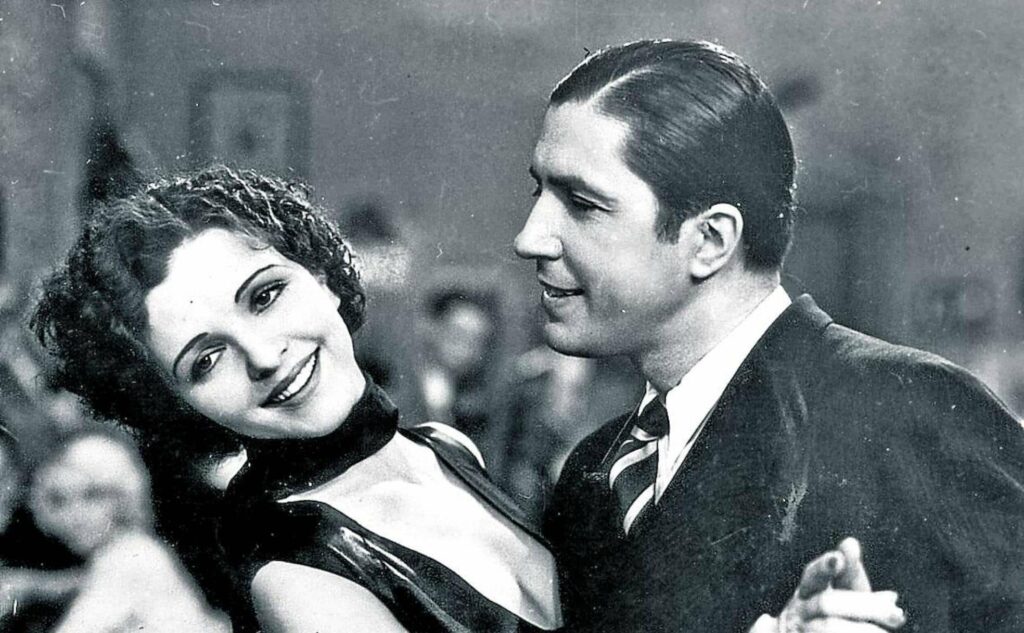
Listen to him on Spotify
We chatted fluently and from banalities we moved on to touch on sensitive topics that today would have to be treated with great delicacy with a stranger.
The conversation was being as varied and intense as the cheese board and there was still a good while ahead. It was clear, we had made a mistake. We should have ordered the 1L bottle of wine. Fortunately it had an easy solution: order another 70cl bottle.
At a certain point she brings out her pride as a mother and grandmother and begins telling us about her daughter, a violinist, and her granddaughter, who at only 6 years old was already learning to play the trumpet.
It's at that moment when she tries to show us her photos on the phone she has on the table.
Monique was experiencing clear disorientation, she didn't know which app she was in, or the reasons why she jumped from one to Instagram and from there to somewhere else. And, clearly, her lack of ease with the phone had nothing to do with her intellectual capacity.
Personally, I had already experienced situations like this, people who get confused by technology or, perhaps, by the supposed complexity of mobile apps. But it had always happened to me with family members or people I have a lot of confidence with, so I had always focused on the specific problem to give an immediate solution and its subsequent explanation: "you're not in the photos app, you're in Instagram, you have to go to the photos one to see yours."
That emotional detachment of being in front of someone "anonymous" allowed me to think and reflect with greater distance. An anonymous and random person in a real context, who, I'm sure, reproduces the "wrong" behaviors that both you and I know. And there they remain, without anyone solving them.
Maybe designing thinking about multitudes doesn't work as unequivocally as we take for granted. If it did, Monique wouldn't have problems showing us photos of her granddaughter.
Miguel Milá in his book "Lo Esencial" explains how he designs for his acquaintances:
"We made that lamp together. My aunt told me what she needed and I tried to give it to her."
I can't imagine Milá using user personas, but rather conversing with his aunt unhurriedly, digressing, without a clear objective, to get to know her better and offer her a lamp tailored to her needs. A specific lamp that satisfies a concrete need that many share. A lamp that many other people will end up buying.
Because, in reality, we're not so different from one another.
I've had this text in my head since I was in Paris a month ago. Remembering the day that David told me that Íñigo, in his Product Management class, encouraged them to talk to strangers... and just a few days ago this post by Diego appeared in my LinkedIn feed about the importance of conversation.
And from Monique, David, Íñigo and Diego to Plato, who, in his Phaedrus puts the following in Socrates' mouth:
"The fields and trees teach me nothing, and only in the city can I benefit from contact with other men."
Follow me on LinkedIn to stay up to date with new posts.
References: