Post content
You hear the wind, the sea, a simple and exotic melody you can't recognize and, in the background, to your right, seagulls. To your left, an insistent SOS.
A voice sounds in your head:
– How did I get here?
The seagulls tell you there's land nearby and you think maybe you should get closer, but the SOS keeps grabbing your attention.
Your mobile phone vibrates, indicating you must make a decision.
–
A few days ago, part of the vidiv team met with Javier Quirós in Gijón to, among other matters, define a roadmap for sonifying the application.
I remembered the sound design classes he taught at the Interaction Design Program at Instituto Tramontana, and specifically a video game I designed as an exercise… and how much fun I had making it. So I thought I'd dedicate a post to sharing the design decisions I made at the time to give it shape.
In fact, the introduction of this text is the first few minutes the user would experience.
Let's look at it in more detail.
–
Synopsis
Celebes Sea, Indonesia. Year 2010.
The protagonist wakes up on a ship in the middle of the ocean. He doesn't remember anything, so he begins sailing with the goal of recovering his lost memory and thus being able to return home.
He will wander the sea and, on his way, will face dangers that will increase (or decrease) his skills and the ship's crew.
The greatest of these dangers are the numerous pirates sailing near him.
After a few hours he will recover his memory and discover that he is one of those pirates he so feared during his journey.
The game continues after this revelation but, knowing his past, he will face a greater moral burden when making some decisions, like attacking other ships or rescuing people.
This moral duality lays the foundation for the different actions that, as a user, you can perform in certain events.
Would you take the path of redemption or continue raiding other players' ships?
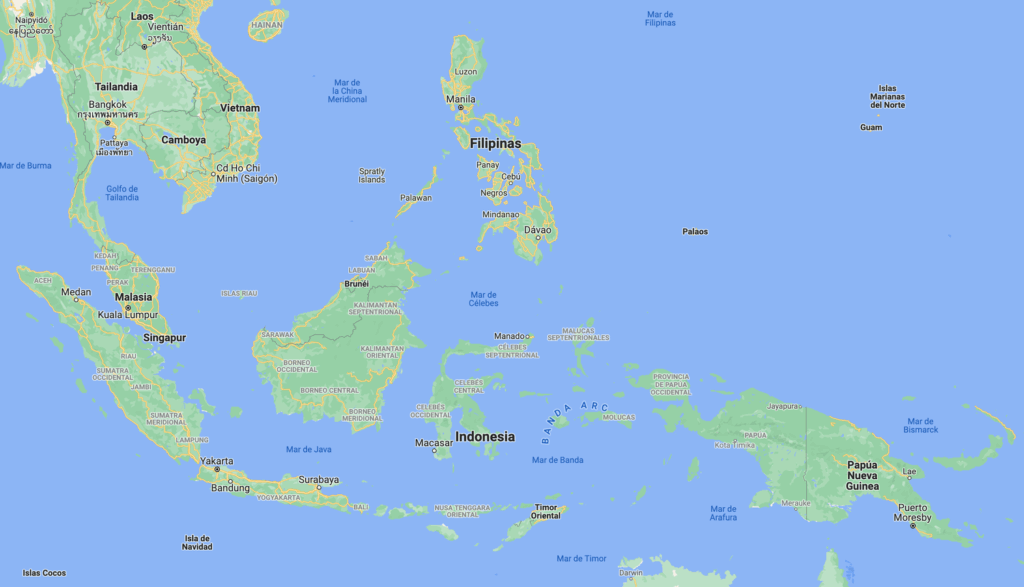
Because it's one of the areas with the most pirate attacks worldwide during 2009-2013.
The game is open world and is inspired by Homer's Odyssey, but I also drew on other references, as disparate as A Dark Room (which you can play for free here)…
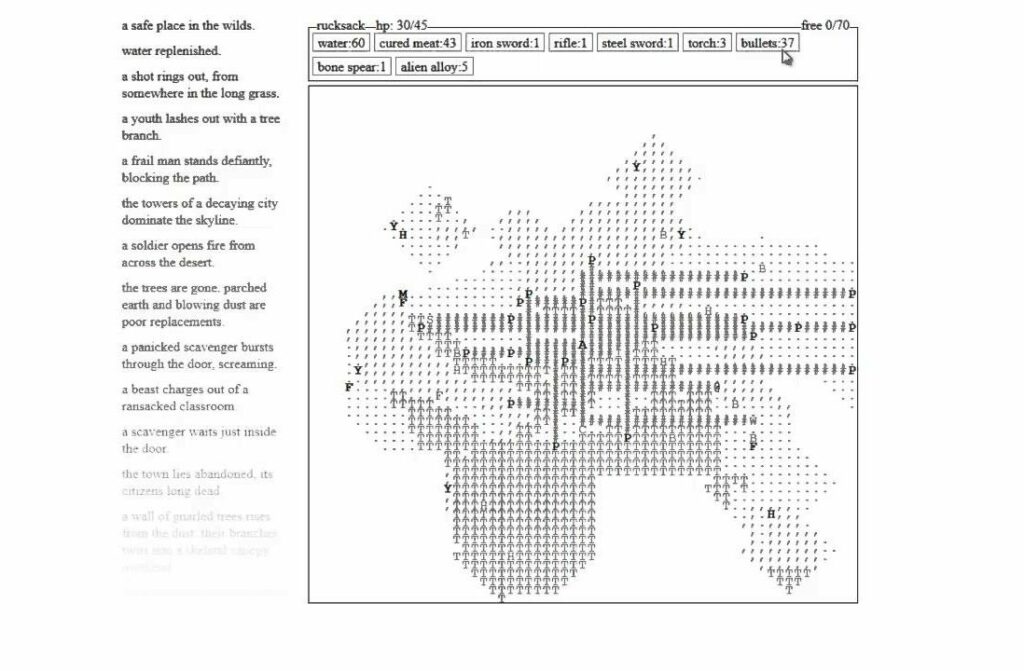
… or Death Stranding, although I must admit it also has a lot of the now classic Demon's Souls.
Game Mechanics
The game consists of the user ensuring that the ship doesn't shipwreck until the protagonist manages to remember his past.
The ship can sail in any direction, according to the movement captured by the smartphone's gyroscope.
The different locations (ports, drifting ships…) are perceived in space through the use of spatial audio.
Once arriving at these locations the mobile device vibrates slightly to inform the user that they have the possibility to interact through two buttons. To generate greater moral polarization in the user, generally these actions will be opposing good/bad choices.
While pressing the action button the device vibrates more and more intensely until the action is finally triggered, accompanied by an interface sound.
Possible actions
- Arriving at a port
When docking at a port, supplies are recharged and they offer you a clue about your past. - Raiding ships
When raiding ships yours becomes stronger or weaker depending on the combat result. - Rescuing people
Rescued people join the crew, strengthening the ship; others will give you additional information for the protagonist to recover his memory. - Interacting with other users
Attacking them or sharing information.
Inputs
- Attack/flee
- Raid/Rescue
- Drop/Weigh anchor
- Attack/share information
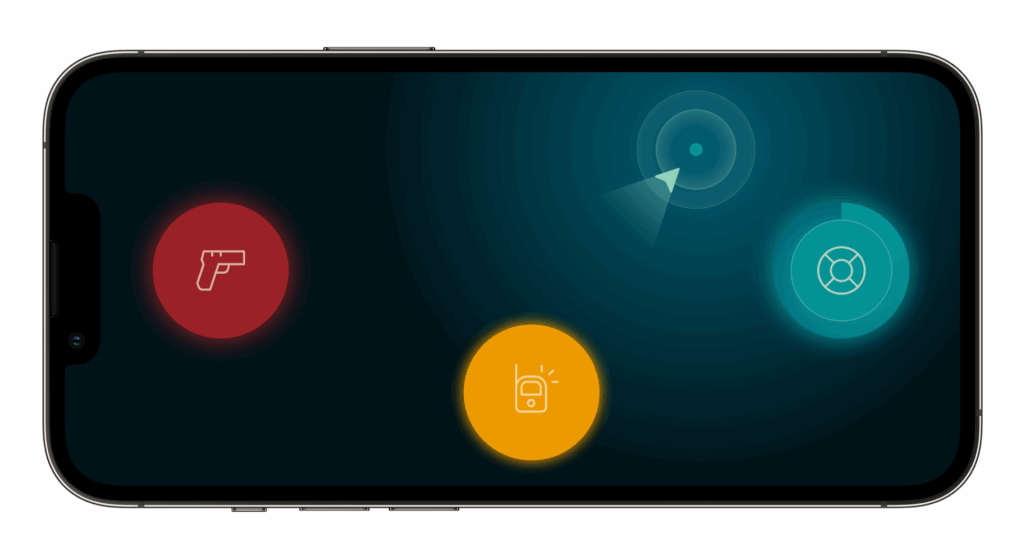
Multiplayer
In addition to game-determined actions, encounters between different users will occur when their ships are nearby.
At that moment they can attack each other or share information (dual action).
Radio mode through a PTT (push-to-talk) type press allows launching a voice message that also determines your position to other players.
This voice message allows total freedom to the player, allowing them to launch a false SOS that attracts another to subsequently attack them.
Sound
We find ourselves in a world where we position ourselves in relation to other elements through spatial audio.
Sound locates us relative to acoustic signals that help us make decisions about where to move.
These acoustic signals gain strength as we get closer or farther from them to indicate proximity or distance.
Taking into account the different elements that will coexist in the soundscape, we can prepare a sketch of it. The different spaces they occupy in it will depend on the time they are playing, their volume and their frequency (in Hz).
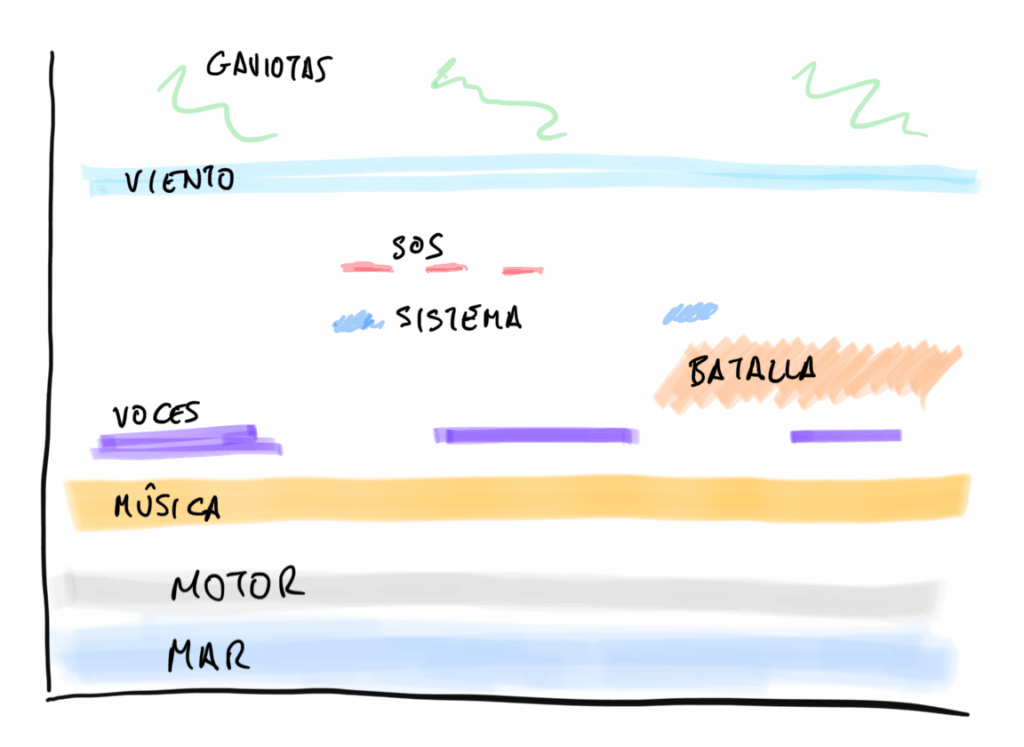
These sound layers we will divide into five types:
1 – Skeuomorphic sounds: provide context and accompany certain actions based on which they are modulated
- Sea sound, rougher when a dangerous situation approaches.
- Wind, stronger when the ship goes faster.
- SOS and ship radios to indicate people adrift
- Seagull sounds to indicate ports
- Battles during combat moments
- Anchor chain for dropping/weighing anchor
- Creaking sounds from the ship itself
2 – Interface sound layer: provide information to the player
For users to better differentiate them from other elements they will have a more digital character. More typical of synthesis than recording something existing in the real world. They are relatively sharp, with a marked attack and some harmonic content. They have tonal characteristics.
- "Reward" sounds when the user achieves an objective
- Alerts to indicate that a battle is being lost, to give the possibility to flee
- These sounds are divided into positive and negative according to the triggered action. Having more harmonic content and tending toward dissonance in the latter case.
3 – Soundtrack
The music evolves as the player gathers pieces that help him recompose his memory. The score starts simple, with some scattered notes and gains complexity as the game progresses to make a parallel with the protagonist's memory reconstruction.
With a strong base of gamelan (traditional Indonesian music) to increase immersion but adapted to more Western tastes (standard scales).
4 – Voice-over
At the beginning the protagonist will make a single brief intervention in the form of an interior monologue to introduce the game. It's a deep male voice, of a man about 30 years old but it sounds weathered and with a marked Southeast Asian accent.
5 – Conversations
The voices of the players themselves communicating with each other during radio mode will be treated with filters and glitch type effects that simulate radio communication.
And how does all this sound?
Press play to reproduce the sound prototype I prepared. The image is its spectrogram.
I recommend using headphones.
Follow me on LinkedIn to stay updated on new publications.