Post content
Previous reading: Omit the Unimportant
–
After reading Dieter Rams' Omit the Unimportant several times, a doubt assails me, something that intrigues me immensely:
What would his kitchen spoon look like?
To visualize it, I start by imagining what his kitchen is like, surely white, with light gray tones, cold, aseptic, easy to clean..
Everything that requires occasional use will be stored away, just like the plates, which aren't taken out until the exact and necessary moment when the food needs to be served and brought to the table.
There will be few kitchen utensils in sight: just the right amount, no more and no less.
Surely several knives: a chef's knife, one for deboning, a peeler, one for bread… or not, maybe just one—is it really necessary to have more than one knife?
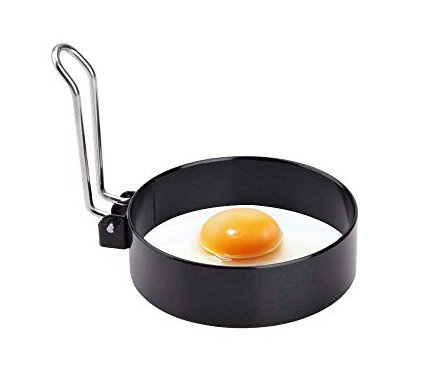
Perhaps there's a slotted spoon for when Rams makes fried eggs, perfectly round, of course. I imagine this one made of silicone, to avoid scratching the bottom of the pan.
But then comes the moment to imagine the spoon he uses to stir soup in a wide pot.
The shapes, perfect, the weight, totally balanced in relation to its handle, but the material?
Knowing Rams' work I inevitably imagine it made of metal or silicone. It's the logical choice, the functional one, the useful one, what will make it durable.
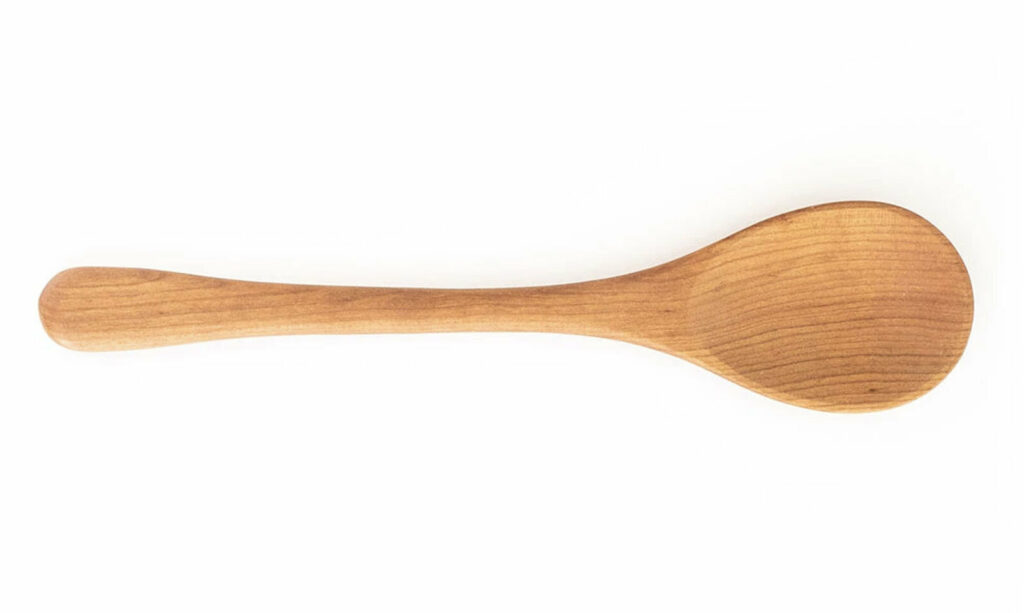
A wooden spoon, on the contrary, would deteriorate quickly and its porosity would allow bacteria to accumulate on its surface, which would also crack over time.
I therefore discard wood.
That's what a little grandmother in her home on the Rhine would use to make fantastic hot soup for her grandchildren when they visit on Sundays. Comfort food.
Where am I going with this? To the point that, from my perspective, there are certain design choices that aren't logical but that contribute to the meaning of an object.
The spoon is an example, but imagine cooking in a warm space, where spices are fresh bunches messily arranged in a vase. It would be very different from doing it in one where they're perfectly stored in small glass jars ordered alphabetically.
The choice of environment is personal and the environment conditions what you create/produce.
It seems a bit pretentious to me that Rams approaches design from a totally functionalist perspective and directly ignores that the aesthetic and functional derive from the cultural… and that there's life beyond Germanic functionalism.
In the text, Rams states that products should be well designed and as neutral as possible, leaving room for self-expression by those who use them. But don't users precisely buy things for those traits that differentiate one product from another?
What happens when purely aesthetic elements (a priori unnecessary) form part of the product positioning or help users connect with them?
The cyberpunk aesthetic in gaming computers is totally accessory, although it serves to help users feel they're part of a community.
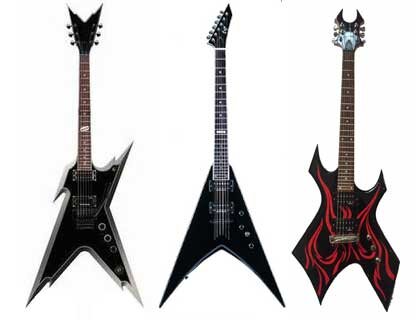
Guitars with extravagant shapes are a fundamental part of the extreme metal aesthetic. Similarly, to create a sense of belonging to a group.
The Fender Telecaster or the Fender Precision are instruments with a design qualified as "perfect" that continues unchanged since the 50s. Does that mean all other similar instruments are superfluous?
When the accessory helps a user feel they're part of a group or, why not, simply to enjoy something that gives them sensory pleasure, doesn't it make it something useful and functional?
As Otl Aicher rightly says in the world as design: "Acquiring a product today is a piece of self-demonstration".
If we follow Rams' criteria, the skeuomorphism of the first iOS doesn't seem to be good design, however it was essential for users to associate that they could develop physical world activities in the virtual world. We can still see vestiges of that tendency in Apple's professional products like Logic Pro X. Are the wood bands really necessary in 2021 to indicate that we're looking at a mixing board?
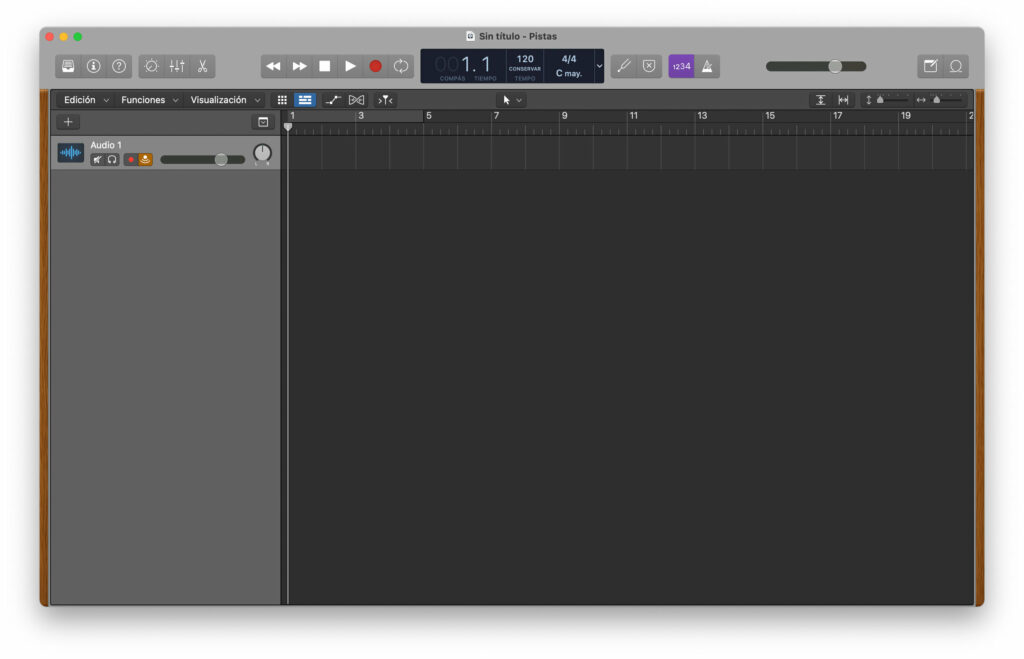
The product positions itself, the user does too.
If everything were designed according to what Rams qualifies as good design we would only need one variety of each product, there would be no personal choice by users according to their cultural/emotional preferences… the lack of options would lead us to communist design.
With this I want to reach the point that design doesn't have to be perfect from an objective and analytical point of view, but that there are many qualities in imperfection. And these contribute to the product.
Right in the text Rams criticizes the fact of using unnecessary design as the designer's expression instead of the product's expression, but isn't Rams' own minimalism derived from his own creative expression and cultural conditioning?
Furthermore, who defines what is important: the user or the designer?
With this I'm not defending design 100% centered on users' appetites. After all, I don't remember who said (I think it was Henry Ford) that if he did what people wanted, he would have tied more horses to a cart and wouldn't have created the car.
–
After all this I imagine Dieter cooking hard-boiled eggs instead of fried ones (they're more functional).