Post content
Soundtrack: Fashion is danger, from the wonderful series Flight of the Conchords.
–
The other day I kept turning over in my head Dieter Rams' text and his Omit the unimportant and how minimalism has become the moral authority governing the design world. In general.
A concrete example that has really surprised me in recent years is the rebranding of Céline.
This "small" twist on the original logo was given by creative director Hedi Slimane as soon as he was hired to direct the brand. With the help of Peter Saville.
You might not know Slimane, but you surely know Saville:
The thing is that Slimane already had a history of suffering from minimalist fevers, like when he converted Yves Saint Laurent into Saint Laurent Paris.
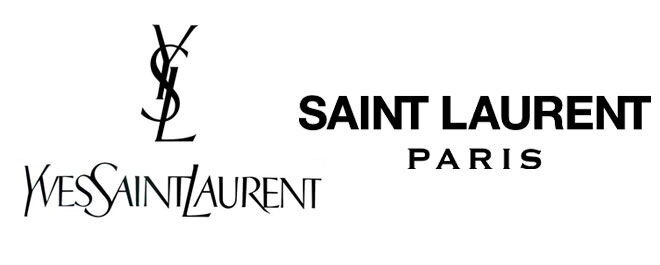
I think the Saint Laurent change is very successful. The classic looked a bit worn by age and a bit outdated for the times we're living in. Especially if you compare it with the logos of Isabel Marant, Alexander Wang, Balenciaga, Burberry, Jil Sander, The Row, Off-White (the old one, I'll come back to this in a couple of paragraphs)… all black sans-serif, more or less bold.
Now, I think that with Céline, the obsession with minimalism has taken a leap that gives me a certain vertigo:
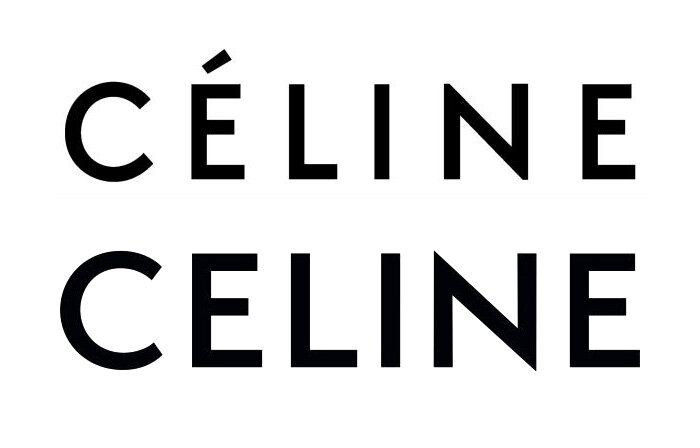
Is removing the accent an Omit the unimportant gone too far?
Personally I think so. For me the accent speaks of the brand's European heritage and provides a classic counterpoint to a logo that, truth be told, hardly needed touching.
Unless what you want is to provoke and get people talking about you. In which case, the controversy it has generated totally justifies removing the accent. I seriously doubt anyone worried about the letter spacing.
As a counterpoint, I'd like to talk about the redesign of the Off-White logo by Virgil Abloh, which follows a totally different direction.
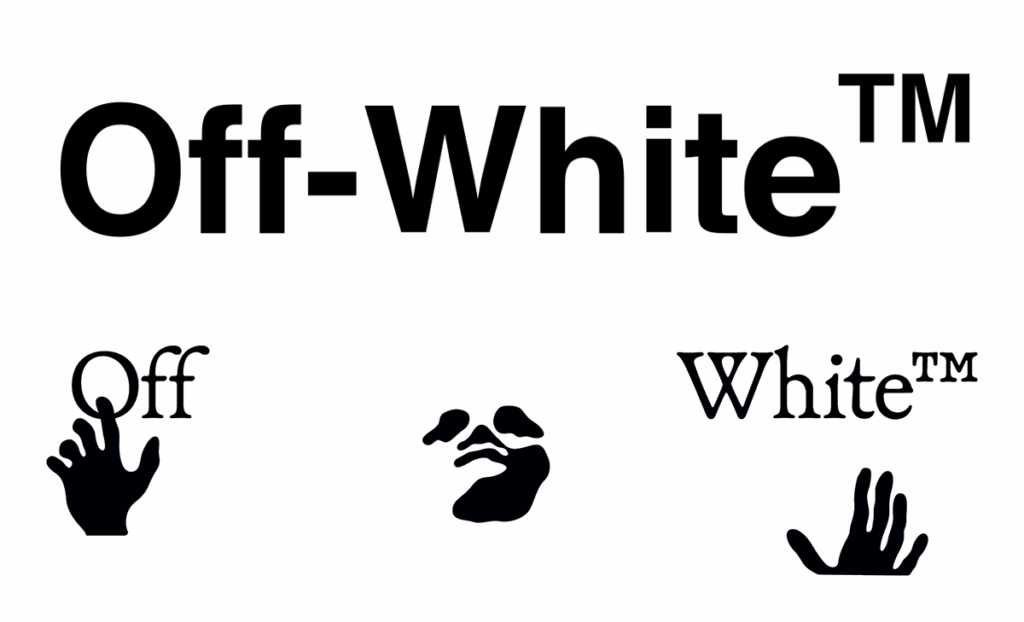
Abloh has opted for the completely opposite direction: serif typography versus the straight lines of sans-serif; he's not content with an icon, but plays with an illustration versus white space and the simplicity of the name; a post-modernist attitude versus the sober, simple and modern luxury of the competition.
Off-White's own "arrows" logo, widely used by the brand, has modernist roots: it first appears in the design system that Kinneir Calvert developed for Glasgow airport.
Virgil Abloh, as a good fan of modernism, is also a fan of Dieter Rams, to the point that Braun has commissioned him to redesign the hi-fi audio system he designed in the 60s.
I seriously doubt that the Farnsworth House was an arbitrary choice when filming the documentary where he talks about the process:
However, he has remained faithful to his ethics of not modifying more than 3% of the original product by simply making a change of materials.
I think he talked about his 3% work method in the speech he gave at Harvard, captured in his book Insert Complicated Title Here, but I'm not sure that's the source where I read it.
This philosophy of sticking to modifying only 3% seems very interesting to me as it speaks of iterative design. Of taking a base and (perhaps) improving the product, little by little. It has a lot of relation to the way of working with software and I think it should be integrated even more into design processes.
Just today I was listening to a podcast where they were interviewing John Maeda, in which he made a distinction between classic design and computational design.
Classic design is Rams' design, where everything is studied to perfection and, when an object is created and launched to market, there's no margin for modification. It's design oriented toward perfection.
However, in computational design, the product constantly evolves, iterating toward a perfection that never arrives.
And that change of perspective between creating the perfect or assuming that perfection will never arrive is what can generate certain anxiety among "classic" designers.
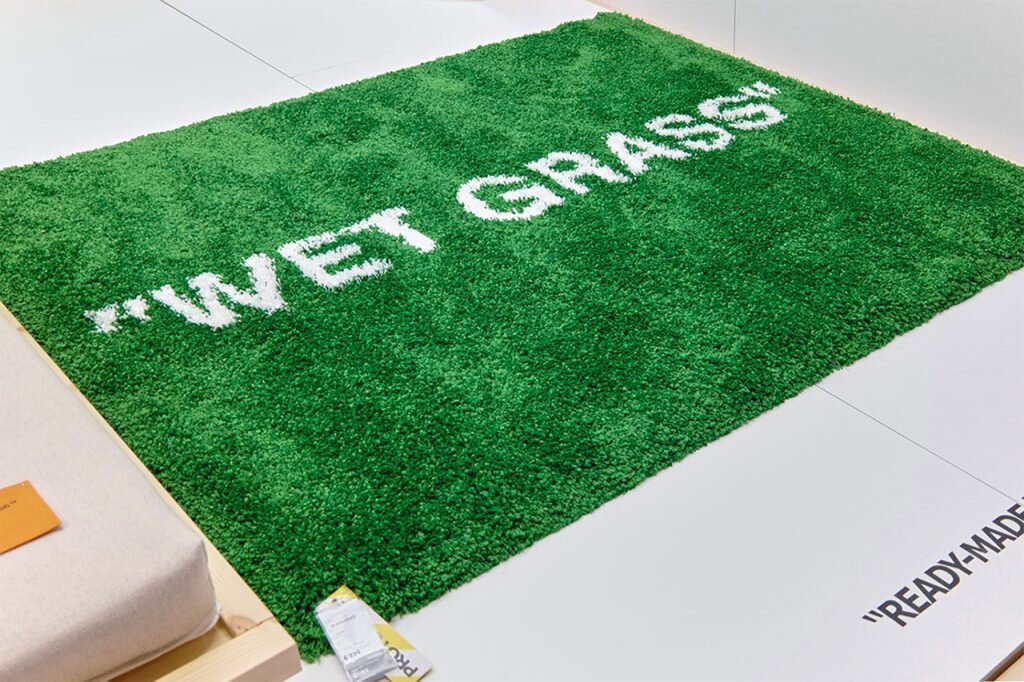
On the other hand, I've always been impressed by how Abloh takes concepts from the art world and brings them to mass culture territory.
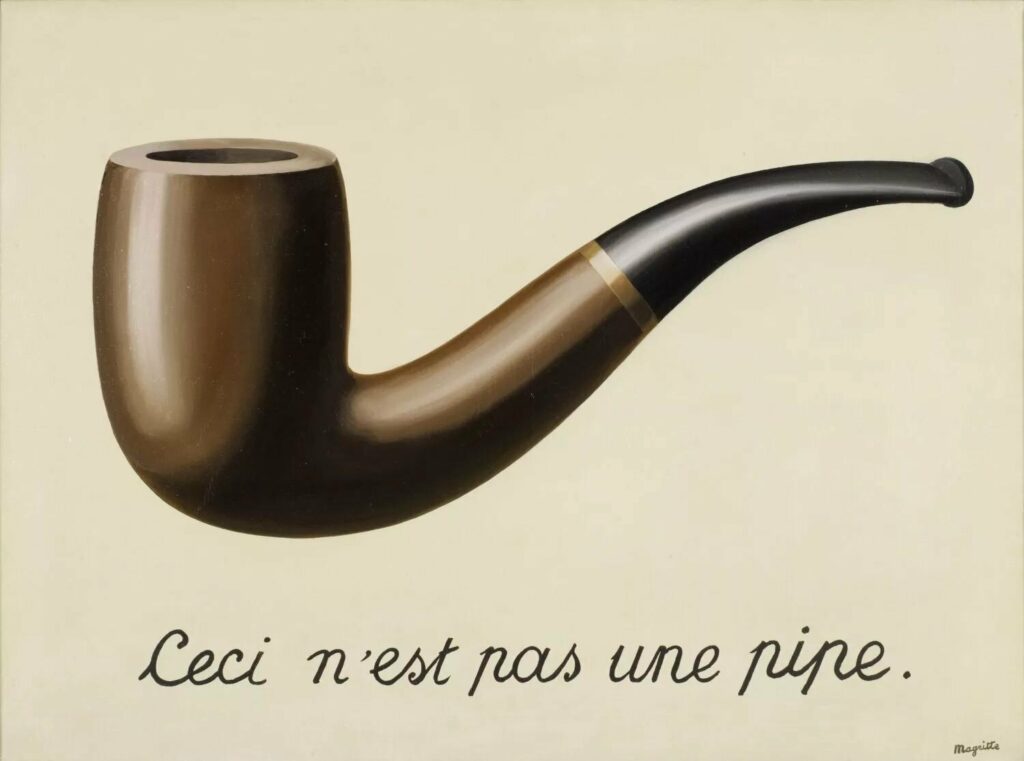
Isn't his use of quotation marks in his creations an evolution of Magritte's The Treachery of Images?
But, returning to the Off-White logo redesign, the character in the illustration seems to have a slight African-American tone, and is emerging from a liquid, or perhaps from the earth. He's definitely rising. I think it's Virgil Abloh's reading of the current zeitgeist and his way of connecting with social movements and diversity.
Maybe he's defining the brand as a firm defender of #blacklivesmatter. That he himself is one I have no doubt, the issue is that he doesn't stop there: he communicates it.
Maybe the protagonist is himself, rising as the first person of color with a creative direction position at Louis Vuitton.
Personally I've been convinced for a long time that the current zeitgeist corresponds to the reinforcement and expression of individual identities by people. That is, a moment of absolute "me-ism".
Although the other day at the Instituto Tramontana Interaction Program the topic came up and Javier Cañada proposed diversity and sustainability as the themes of the current zeitgeist.
He convinced me especially about diversity, especially while I was internally connecting it in my head with Abloh's work.
All this leads me to ask myself the following question:
As a designer, how do I identify the current zeitgeist so that the company I work for makes the right decisions to create communication and narrative that connect with consumers?
The first thing that comes to mind is the Psychohistory from The Foundation Trilogy by Asimov.
Is being a "psychohistorian" part of a designer's functions?
I think so, and more so now that I think we're about to change course: what will the post-covid trend be?
Maybe it's the massive parties celebrated a few days ago at the end of the state of alarm that give us clues that we're heading toward a moment of hedonism: doing everything we didn't dare do because now we're aware that the world, as we know it, can end when we least expect it.
Although there's also the possibility that the loneliness, confinement and death we're witnessing every day will lead us to a world of nihilism and egos.
Will the 80s return? Will grunge return?
I don't think it will be long before we experience the zeitgeist change.
Meanwhile I'll stick with Abloh's phrase from the end of the documentary:
"We all make stuff, the goal is to make it with purpose."