Post content
Soundtrack: Songs in the key of life, Stevie Wonder
–
This post is about a story I've been wanting to write about for a long time. A story that made me reflect deeply on the role of design in our society and how it can improve (or worsen) people's lives.
But really improve it.
Not design that thinks it improves society by eliminating a couple of inputs in the login process to reduce friction or by creating a useful 404 error page.
It's a simple story about a man who must be around 40 years old now.
This person was born with a degenerative visual disease that took many years to diagnose. And when I say many, I don't mean 3 or 4, not even 10, I mean almost 20 years.
How could it take so long to discover he had this disease?
Because he never considered it a disease and, therefore, didn't consider it something to communicate to his doctor or his family.
For him it was normal. For him the world was (and continues to be) like this: blurry.
And that didn't stop him from having a job either. Specifically, he drove a forklift of the type used to move pallets.
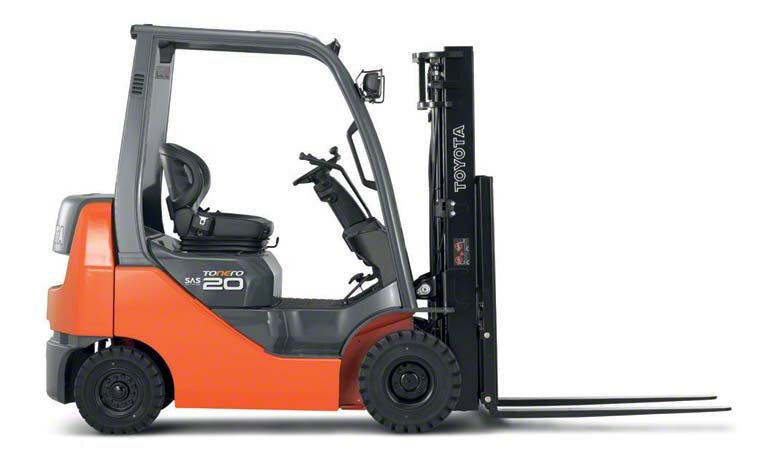
Just as he could recognize people without problem by their body shape and movements, he had so thoroughly internalized the shapes, colors, processes, lights and shadows that he had no trouble driving through the factory or placing one pallet on top of another.
Until one day a new forklift model arrived that replaced the previous one.
A state-of-the-art forklift, with a screen and all kinds of digital controls. Everything designed to "improve" the operators' lives with technology, leaving behind the old analog lever system.
The protagonist of this story couldn't adapt to the new machine and, therefore, lost his job.
Design and digitalization, in this case, were not progress for this person, but rather caused him to be unable to continue his life with the normalcy he was used to.
–
I'm on the train heading to Madrid and by chance, while I was writing this text, a girl in a wheelchair passed by me. A wheelchair with an electric motor and analog controls, not digital ones.
–
The first thing that surprised me about this story was the way this man accepted that his way of seeing was normal and that this is how everyone in the world saw. I like it as a story of painless acceptance. Normalizing what's different because you don't know it's different. He probably never felt different until someone labeled him as such.
Maybe we should start eliminating certain labels and categorizations to adopt a truly inclusive position. While we're at it, maybe we'd avoid discussions about whether the most correct term is "disabled," "handicapped," "person with disabilities"... or whatever the latest politically correct name dictates.
Moreover, in some cases, this taxonomic anxiety seems counterproductive to me since it creates an artificial differentiation rather than real inclusion.
We are all people, regardless of whatever label society wants to put on each one of us. And, in our role as designers, we have to make our products reach as many people as possible, whatever their abilities and skills may be.
My second reflection was that maybe we're becoming obsessed with digitalization and process automation.
The digitalizing craving (accelerated even more by COVID) that's causing many people to be left behind: those who can't afford internet access, those who get lost in the impossible forms on the Social Security website, in a simple online purchase or trying to open a crypto wallet...
But not only that, we're also setting aside a physical part in our relationship with objects that has always accompanied us throughout human evolution.
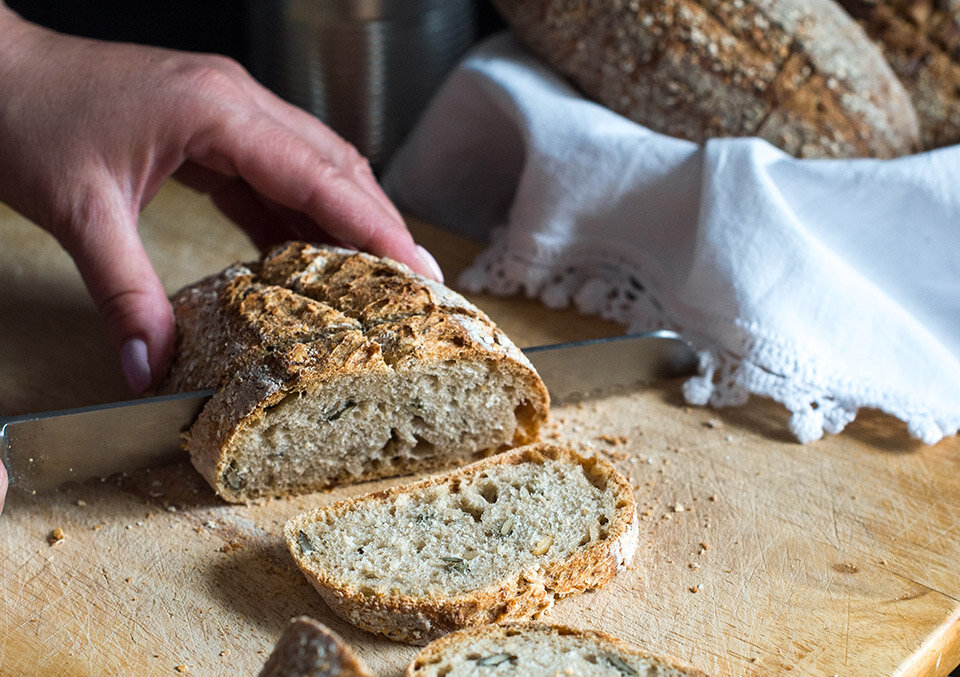
That part of us that enjoys when we shift gears in a manual transmission car, when we turn a potentiometer, when we hit the keys of a keyboard... or when we cut a crusty bread loaf with a serrated knife instead of taking sliced bread from a bag.
After all this, I think it's time to start reading Analogue and Digital, by Otl Aicher.