Post content
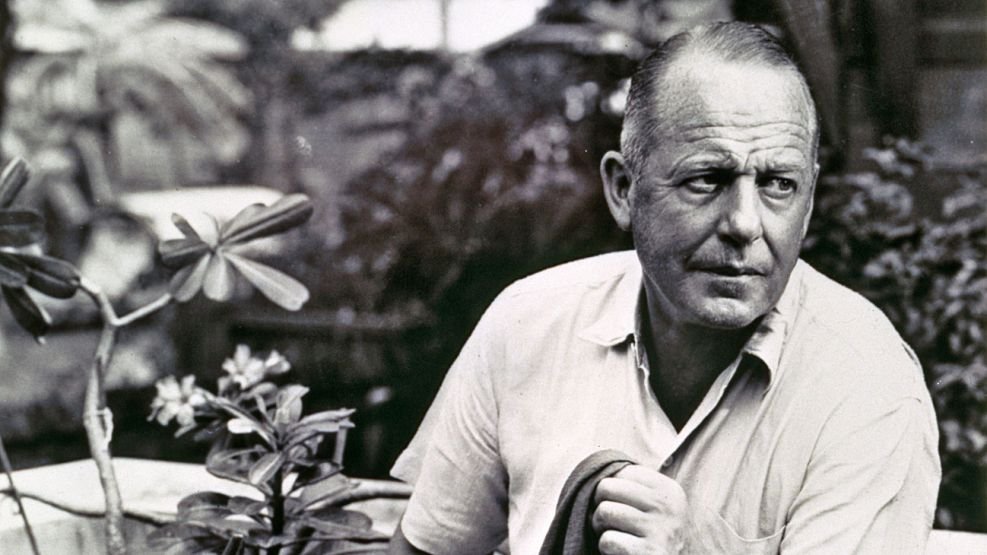
On any "Things to see in Bangkok" list you'll find the classic temples (Wat Arun, Wat Pho, Wat Prayoon...), the Grand Palace, the markets (Chatuchak, Mae Klong, Patpong...), Chinatown, the red-light district... and Jim Thompson's house.
It's easy to imagine why a temple or market would be on those lists. What's special about this house?
And even more intriguing: who was Jim Thompson?
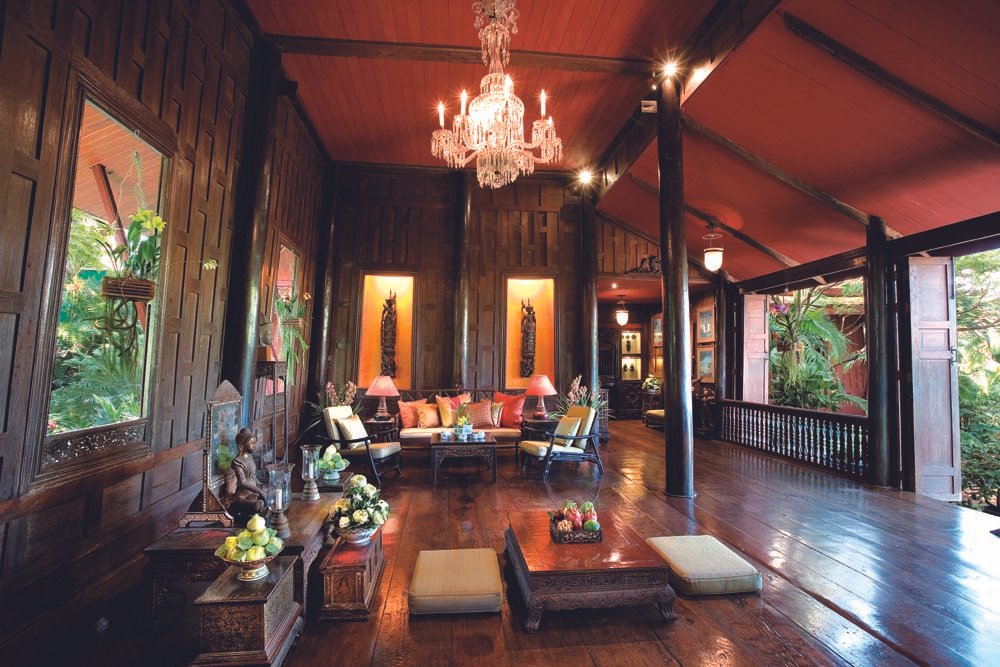
Let's start with the house, which is actually six buildings and an enormous garden.
Construction of the residence begins in 1958, when James Harrison Wilson Thompson (Jim Thompson's full name) buys land next to the silk weaver community of Bahn Krua. Only a narrow klong (canal in Thai) separates them. On foot, it's about 10 minutes from the Bangkok Art and Culture Centre and about 15 from Siam Square, one of young Thais' favorite spots.
The six houses that make up the complex were brought from different parts of Thailand. All made of teak and all painted in dark red, as was traditional. One of them, the oldest, belonged to a textile manufacturer and had been built in 1800. The nail-free construction technique facilitated the work of dismantling at the original location and subsequent reconstruction on Jim's property.
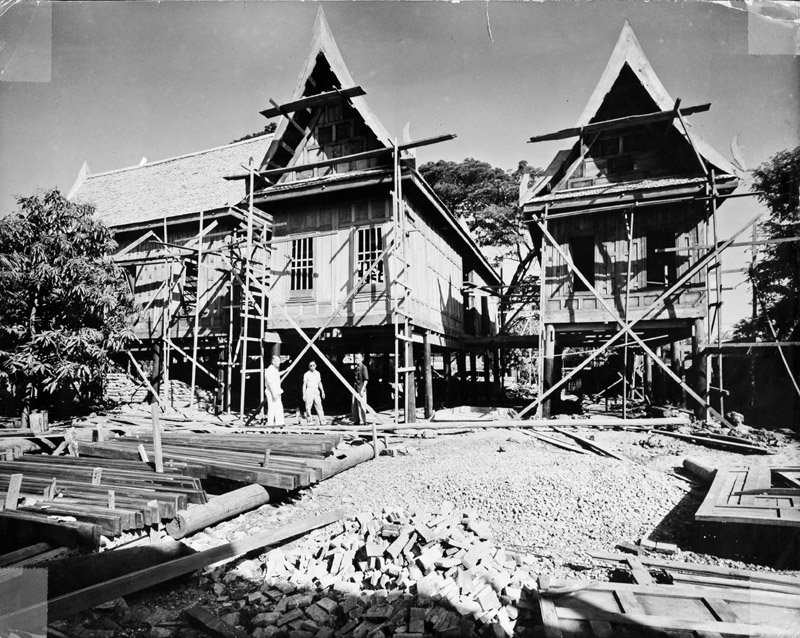
This way of assembling buildings creates a ledge at the bottom of door frames. This small barrier has a double (or triple) function, as our guide explained during the visit:
"It's an integral part of the structure and also prevents rats and babies from passing from one room to another."
The house design essentially follows Thai customs, but Jim made certain modifications to adapt them to his tastes. For example, the central staircase is located inside instead of outside.
The garden is lush, as you'd expect in a tropical climate. And in it, in a clearing, stands a small house-shaped altar: a dwelling for the spirits that inhabit the complex.
The residence, a warehouse for Jim Thompson's extensive Asian art collection, is the perfect definition of what we'd call "Asian luxury."
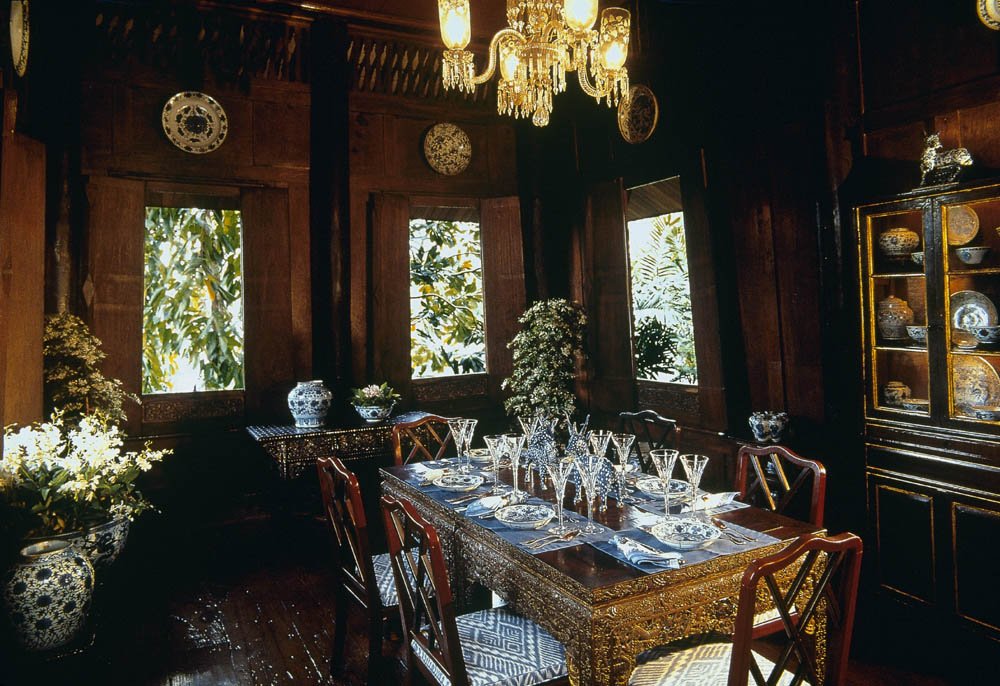
In the rooms you'll find Ming dynasty pieces, Victorian-era chandeliers, Thai artworks, Burmese statues, and even a table that had been used by King Rama V of Thailand (1868-1910).
During the guided tour they explain many things about the house and the artworks that accumulate there. However, they don't elaborate much on the details of its owner's life. They tell you that Jim Thompson was a former American military man in love with Thailand who boosted the country's silk market. That Robert Kennedy-caliber guests had dined in the dining room. And that he disappeared under strange circumstances while taking a walk in Malaysia.
All very ideal, all very unreal: the savior of the Thai textile industry who loved its art and traditions. There had to be a dark story behind it. This is Thailand, I would be greatly disappointed if it weren't so.
So when I got to Spain I did what any person with Internet would do: read about his life. And I started to see the seams in what we had been told.
The reality is that his father was a wealthy textile manufacturer and his mother the daughter of a Union Army general during the American Civil War. Jim clearly inherited traits from his family.
He graduates from Princeton and studies architecture, without managing to finish the degree due to his low level in calculus. He still works designing houses for the rich on the East Coast. However, at thirty he leaves to enlist in the United States Army. His military career leads him to work at the Office of Strategic Services, the OSS, the American intelligence office during World War II. What would later become the CIA.
Jim had been a spy.
And his training had been brutal. According to his former colleague Alexander MacDonald:
"They taught us to lie and steal, kill, mutilate, spy, deceive, terrorize and destroy. It was the Ten Commandments in reverse. There, for example, the personal combat class was led by a former Shanghai police colonel. He demonstrated how to strike with the hand at an opponent's trachea, how to grab an arm so you could crush the fingers, how to immobilize a rival by pressing a nerve in the neck. 'And never hesitate to go for the balls' – he said."
They send him to liberate Thailand from Japanese occupation when the war was already ending. And, once there, he decides to stay and live in Bangkok, where his passion for Asian crafts and art begins. In those years he befriends Connie Mangskau, a translator working for the Allies who becomes one of his best friends. And the last person to see him alive.
Soon after he starts working alongside one of his former Princeton classmates, Charles Woodruff Yost, US ambassador to Thailand. Yost was married to a woman, Irena, with whom Jim would have an affair not of one night, but of 11 years. Irena had a child and it couldn't be confirmed who the father was.
Things weren't as perfect as they had made us believe during the guided tour.
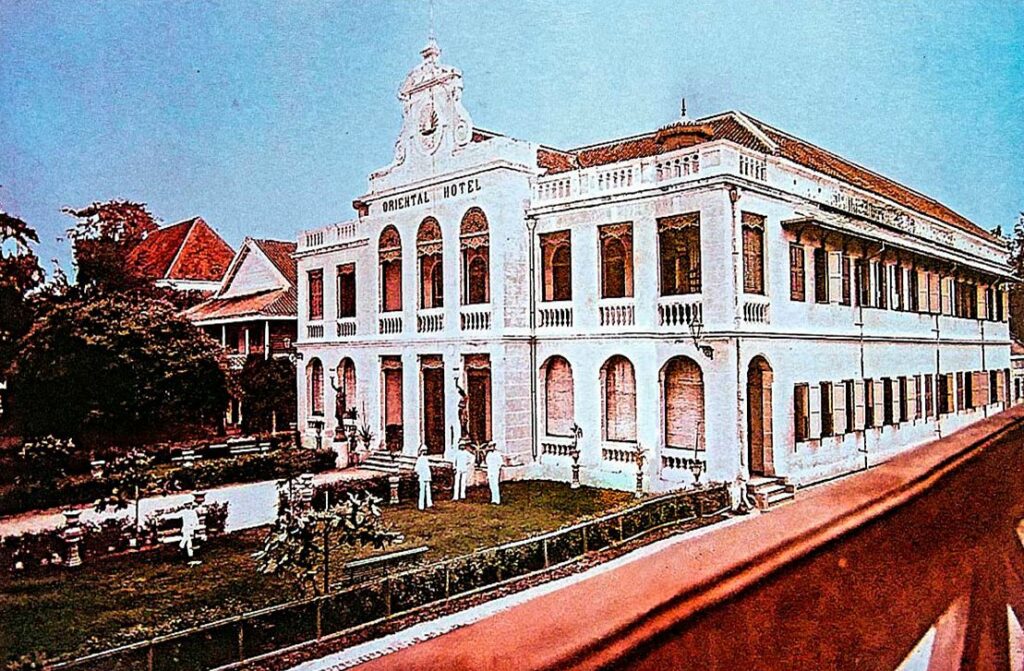
Later his life takes another turn. His wife leaves him for another man and he leaves the army (probably influenced by the death of some of his friends). After this vital break he decides to return to Thailand, where he partners with other investors to buy the Oriental Hotel in Bangkok. The Oriental was the celebrities' hotel of the era. The Chateau Marmont of Southeast Asia. Jim had a good eye for parties. However, during the building restoration process he abandons his partners and dedicates himself to the textile world. Specifically to silk.
Thanks to Thompson, the Thai silk world experienced a revolution. On the aesthetic level through product treatment, on the social level it lifted thousands of people out of poverty.
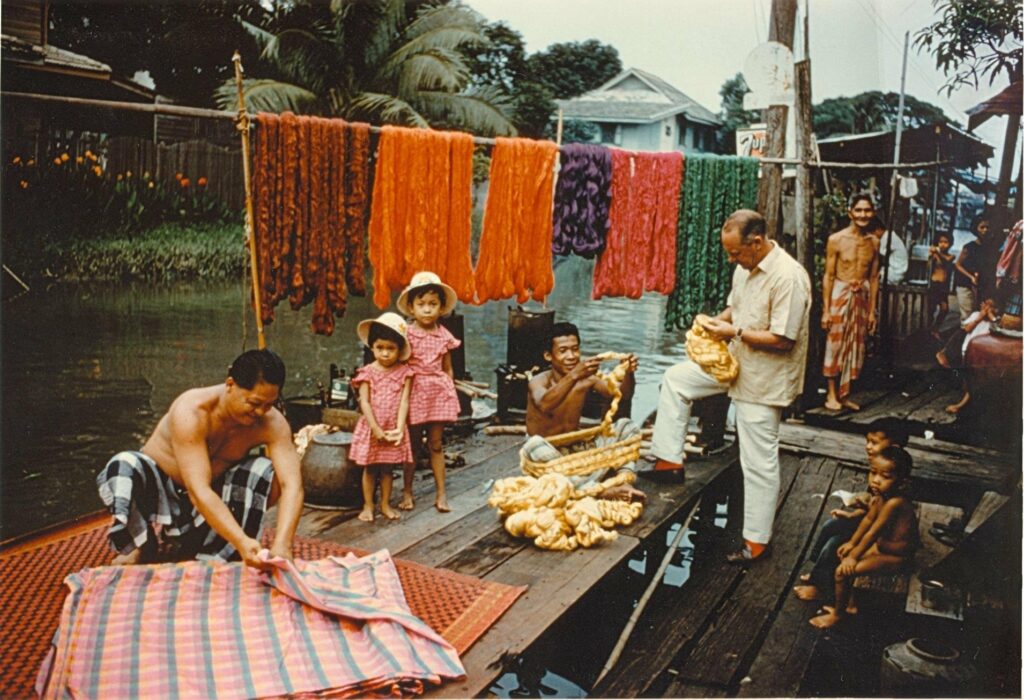
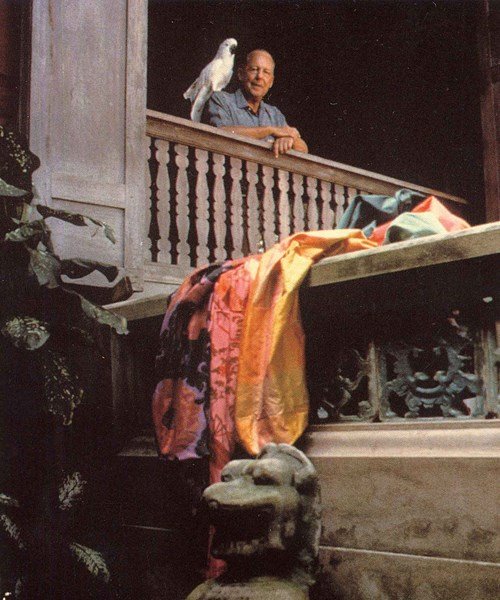
He becomes Thailand's "Silk King" and his house becomes the meeting place for personalities from the USA. Among them his good friend Truman Capote, openly homosexual, something that American society of the time didn't handle very well.
Peace gives way to the Cold War and, in Asia, the United States sides with countries with anti-communist regimes. Thompson, for his part, publicly defended Asian territories seeking independence.
Homosexual friends and a political stance contrary to the country he had defended years earlier. His former OSS colleagues would be pleased.
In 1967 he visits Cameron Highlands in Malaysia together with his friend Connie Mangskau (the one who worked as a translator for the Allies). On Sunday, March 26, he goes out for a walk and disappears. His search was one of the largest in Southeast Asian history.
His disappearance continues to be a mystery.
Some reflections:
- If what you tell about your brand or product has gaps, your audience will fill them for you.
- Design a narrative that matches your reality.
- How you tell a story is more important than the story itself.
- Some people will repudiate your story, others will embrace it.
- The day after finishing this post I saw a girl on the street with a t-shirt with a phrase typical of a self-help book: Be real, not perfect. It could apply perfectly here.
- A little mystery to maintain interest is fine, but integrity and honesty are more important.
In 1974 Thompson was declared dead in absentia by a Thai court.
–
Currently the Thai Silk Company Limited is in talks to carry out a TV series based on his life. Maybe they're taking a turn in how they tell their brand story.
Follow me on LinkedIn to stay updated on new posts.
References and documentation:
https://en.wikipedia.org/wiki/Jim_Thompson_(designer)
https://jimthompsonhouse.org/the-thai-house
https://www.jimthompson.com/en
https://en.wikipedia.org/wiki/Cameron_Highlands
https://es.wikipedia.org/wiki/Bangkok
https://en.wikipedia.org/wiki/Charles_Yost
http://jimalgie.club/the-disquieting-american-a-bio-sketch-of-the-spy-and-silk-trader-jim-thompson/
http://thingsasian.com/story/curious-case-jim-thompson-thai-silk-king
https://en.wikipedia.org/wiki/History_of_Thailand
https://en.wikipedia.org/wiki/James_H._Wilson
https://www.afar.com/magazine/the-history-of-the-mandarin-oriental-bangkok
https://www.chateaumarmont.com
https://www.cntraveler.com/gallery/best-things-to-do-in-bangkok
https://www.lonelyplanet.es/asia/tailandia/imprescindible/bangkok
https://jimthompsonheritagequarter.com/es/service/jim-thompson-house-museum/gallery
https://asianews.network/jim-thompson-aims-to-become-the-first-global-lifestyle-brand-in-asia